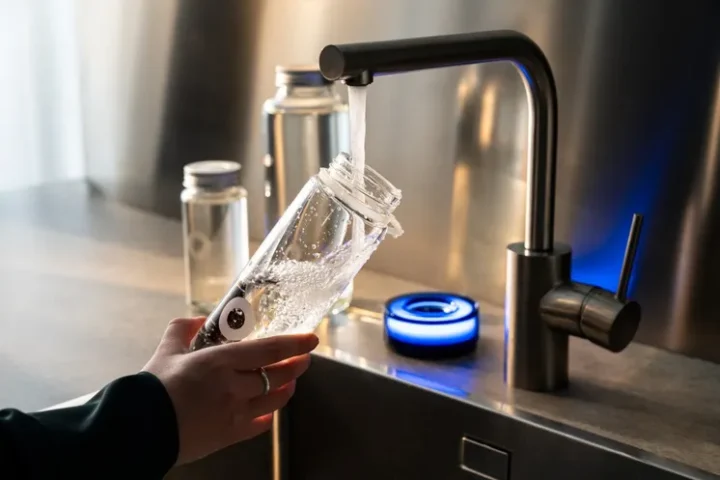
There’s a funny thing about drinking water: when it tastes good, nobody talks about it. It’s just there, sitting in a glass beside the computer or waiting in the refrigerator after a long day.
But when the taste changes, you notice immediately.
Maybe the water has a faint mineral flavor. Maybe it smells slightly different after sitting in the glass. Or perhaps you’ve simply gotten into the habit of buying bottled water because the tap version doesn’t taste quite right.
Before spending money on another case of bottles or an under-sink filter that may not address the real problem, it helps to step back and look at the water itself. Good drinking-water treatment isn’t about buying the most advanced equipment available. It’s about matching the treatment to the actual characteristics of the water.
That sounds simple. In practice, it’s where many homeowners go wrong.
Start With Testing, Not Guesswork
Water can contain minerals, sediment and other substances that affect taste, odor and appearance. Some concerns are obvious, while others aren’t noticeable without testing.
Testing provides a starting point. It can reveal hardness, iron, pH and other characteristics that may influence which treatment approach makes sense.
This is particularly important for private well owners, because groundwater conditions can vary significantly between properties. Even neighbors may have noticeably different water.
For municipal water users, testing can also be helpful when there are persistent taste or odor complaints or when household plumbing may be contributing to the problem.
The point isn’t to turn your kitchen into a laboratory. It’s simply to replace guesswork with useful information.
What Reverse Osmosis Actually Does
Reverse osmosis has become a popular choice for households looking to improve drinking water, and there is a good reason for that.
The process uses pressure to push water through a semipermeable membrane. The membrane allows water to pass while reducing many dissolved substances.
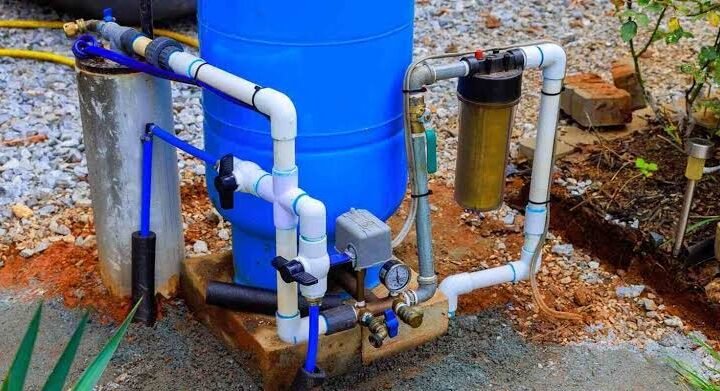
For certain water-quality concerns, reverse osmosis solutions can provide a practical way to produce treated water at a dedicated kitchen faucet.
But reverse osmosis isn’t a universal answer. It doesn’t make every other type of treatment unnecessary, and it isn’t always needed.
The best application depends on what’s present in the incoming water and what the homeowner wants the system to accomplish.
Drinking Water Treatment Doesn’t Have to Treat the Whole House
One common misconception is that improving drinking water means treating every gallon entering the property.
Not necessarily.
If your primary concern is the quality and taste of water used for drinking and cooking, a point-of-use system can be a sensible option. It treats water where you actually consume it instead of applying the same technology throughout the home.
That can be especially useful when the rest of the household water is acceptable but the kitchen water needs additional treatment.
A whole-home system may make more sense when there are broader concerns such as hardness, iron or sediment affecting multiple fixtures and appliances.
The two approaches can even work together.
Choosing Between Different Filtration Methods
Not all filters do the same job.
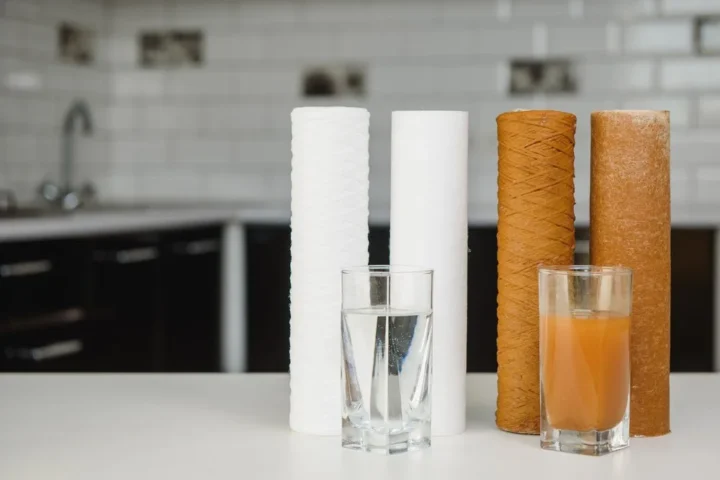
Carbon filtration is often used to improve certain taste and odor characteristics. Sediment filters are designed to capture particles. Water softeners address hardness rather than acting as general-purpose drinking-water filters.
Reverse osmosis works differently by reducing many dissolved substances.
Understanding those differences helps prevent a common mistake: assuming that a filter advertised as “purifying” water will automatically solve every problem.
It won’t.
A good treatment recommendation should explain what the equipment is designed to reduce and why it fits the results of your water testing.
Water Conditions Should Guide the Decision
The same treatment system can perform differently depending on what enters it.
Water conditions such as hardness, sediment, iron, pH and dissolved substances can influence system performance and maintenance requirements.
For example, an RO membrane may benefit from pretreatment when incoming water contains characteristics that could shorten membrane life or reduce efficiency.
Likewise, a filter that works well under light sediment conditions may require more frequent maintenance when the incoming water contains substantial particulate matter.
This is why professional system sizing and water analysis can be valuable. The equipment needs to fit the water, not just the kitchen cabinet where it will be installed.
Taste Is Personal, but the Cause Matters
Two people can drink the same water and have completely different opinions about it.
One might say it tastes perfectly fine. Another might describe a noticeable chlorine flavor or metallic aftertaste.
Taste is subjective, but there are often physical reasons behind it.
Chlorine, minerals and other naturally occurring substances can influence flavor and odor. Water temperature can affect perception, too.
If taste is the primary complaint, the right treatment depends on identifying what is causing that taste.
Sometimes a simple carbon filter is enough. In other cases, a more advanced system may be appropriate.
The goal should be to solve the cause rather than simply cover it up.
Think About Water Used for Cooking
Drinking isn’t the only reason to care about kitchen water.
Water is used to make coffee, tea, soups, sauces, rice, pasta and countless other foods. Its mineral content can subtly influence flavor.
Coffee enthusiasts, in particular, tend to notice this quickly. Water chemistry can affect extraction, which means the same coffee beans may taste different depending on the water.
That doesn’t mean every kitchen needs a sophisticated filtration setup. It simply shows why water quality can matter beyond the glass sitting on the table.
Maintenance Is Part of the System
A filtration system is only useful if it’s maintained.
Filters become saturated. RO membranes eventually need replacement. Storage tanks and connections may require inspection. If cartridges aren’t changed when necessary, water quality and system performance can decline.
Maintenance schedules vary depending on the equipment and incoming water conditions.
Keep records of filter changes and service visits. It takes very little effort and makes it easier to recognize when something is overdue.
Also, pay attention to changes in taste, odor or flow. Your water can sometimes tell you that a filter needs attention before you notice anything else.
Look Beyond the Initial Price
It’s easy to compare water treatment systems based solely on installation cost.
But the cheaper option isn’t always the cheaper system over several years.
Consider replacement filters, membrane costs, water efficiency, service requirements and expected equipment life.
A system that costs slightly more initially but uses readily available replacement components may prove easier and less expensive to maintain.
Ask about these details before installation. A good provider should be comfortable discussing them.
Drinking Water Solutions Should Fit Real Life
The best drinking water solutions aren’t necessarily the most complicated ones.
They should fit the household’s water quality, daily usage and priorities.
A small household may need only a point-of-use filter. Another family may benefit from reverse osmosis combined with whole-home treatment for hardness or other concerns.
The important thing is that the equipment has a clear purpose.
If you know what you’re treating and why, it becomes much easier to choose the right technology without getting distracted by long feature lists or impressive-sounding claims.
Better Water Starts With Better Questions
There’s no need to make drinking-water treatment mysterious.
Ask what is actually in the water. Ask what you want to improve. Ask what the proposed equipment removes or reduces. And ask what maintenance will be required after installation.
Those questions can save money and frustration.
Ultimately, good drinking water isn’t about owning the fanciest filtration system. It’s about having water you feel comfortable drinking every day.
Once the right treatment is in place and properly maintained, the difference may be surprisingly ordinary. You’ll fill your glass without hesitation, make coffee without wondering why it tastes different, and stop thinking about the water quite so much.
And really, that’s the goal. Good water should quietly fit into your life, not become another problem you have to manage.