There’s a certain freedom that comes with having a private well. You aren’t depending on the city water supply, and the system quietly provides water for everything from morning showers to late-night dishes.
But that freedom comes with responsibility.
Unlike municipal water, private well water isn’t managed by a public utility on your behalf. The quality can change with weather, groundwater conditions, nearby land activity, well construction, and even changes inside the plumbing.
That doesn’t mean well water is automatically problematic. Plenty of homes have excellent groundwater. It simply means homeowners need to understand what’s coming out of their own tap.
For many properties, the smartest approach is regular testing, sensible maintenance, and treatment that responds to actual water conditions rather than guesswork.
Your Well Is Part of the Water System
It’s easy to think of the well as a hole in the ground with a pump attached.
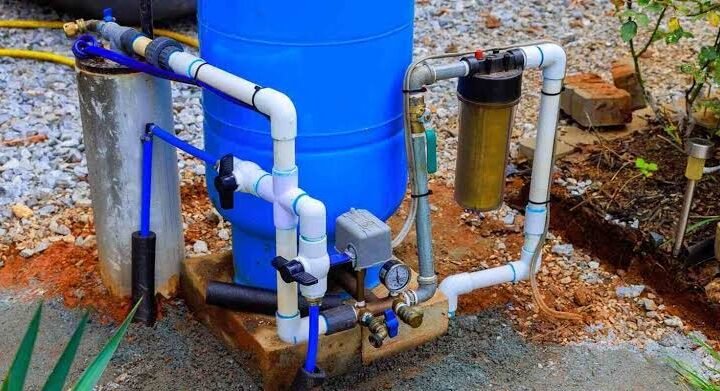
In reality, it is part of a larger system that includes the well casing, pump, pressure tank, plumbing, treatment equipment, and household fixtures.
Groundwater moves through soil and rock before reaching the well. Along the way, it can naturally pick up minerals and other substances.
Some characteristics are harmless but annoying. Others can affect taste, staining, plumbing, or the suitability of the water for particular uses.
That’s why well water treatment should be based on testing and the specific conditions of the property.
There isn’t one universal treatment system for every well.
Testing Should Be a Routine Habit
With a private well, testing isn’t something you should think about only when the water looks strange.
Water can appear perfectly clear while still containing substances that aren’t visible to the eye.
Testing can provide information about bacteria, pH, hardness, iron, manganese, nitrate, and other characteristics depending on the circumstances and test panel.
The appropriate testing schedule can vary based on local guidance and individual well conditions. If there has been flooding, construction, a change in taste or odor, or another unusual event, additional testing may be appropriate.
A laboratory report might not be the most exciting piece of mail you’ll receive, but it can tell you much more than your senses can.
Why Well Water Can Taste Different
Many well owners notice that their water has a distinct taste.
Sometimes that’s simply due to naturally occurring minerals. Water chemistry can vary significantly from one area to another, so two wells only a short distance apart can have surprisingly different characteristics.
The presence of certain minerals can affect flavor, while sulfur compounds may create a noticeable rotten-egg odor.
That doesn’t automatically mean the water is unsafe.
It does mean the cause should be identified before choosing a treatment system.
Carbon filtration, oxidation-based treatment, softening, or other technologies may be appropriate depending on the specific issue.
Hardness Is Common
Groundwater often passes through rock formations that contain calcium and magnesium.
These minerals contribute to water hardness.
Hard water can leave spots on glassware, deposits around faucets, and scale inside water-using equipment. Soap may also behave differently, making rinsing more difficult.
A water softener can reduce hardness when the level is high enough to create household problems.
But remember: softening is not the same as filtration.
A softener is designed primarily to address hardness minerals. It isn’t a universal solution for every substance that may be present in groundwater.
Understanding that distinction can save you from expecting one piece of equipment to do five different jobs.
Iron Can Leave a Big Mess
Few water-quality issues are as visually obvious as iron.
Depending on its form and concentration, iron can cause orange, reddish, or brown staining on sinks, toilets, laundry, and fixtures.
Sometimes iron is dissolved and invisible when the water first comes out of the faucet. Exposure to air can then cause it to oxidize and form visible particles.
Other times, particulate iron is already present in the water.
Treatment depends on the form and concentration.
A basic sediment filter may help with certain particles, but dissolved iron often requires a different treatment strategy.
This is another reason testing matters. You want to know what you’re treating.
Sediment Can Come From More Than One Place
Sand, silt, rust, and other particles can enter well water under certain conditions.
A small amount of sediment may be manageable with filtration, but a sudden increase deserves attention.
Changes in sediment could be related to the well itself, the pump, groundwater conditions, or another part of the system.
A whole-house sediment filter can protect fixtures and treatment equipment from particles, but it shouldn’t be used to hide an underlying well problem.
If the water changes dramatically, investigate first.
Don’t Forget About the Well Itself
Treatment equipment can’t compensate for every well problem.
The physical condition of the well matters.
The well casing, cap, surrounding drainage, pump, and pressure system should be maintained appropriately. Surface water should be kept away from the wellhead as much as possible, and homeowners should follow applicable local recommendations for inspection and testing.
If the well has been flooded, damaged, or disturbed, don’t assume the water is fine simply because it looks clear.
The source needs attention too.
Different Problems Need Different Treatment
This is where well treatment can become confusing.
A softener handles hardness. Sediment filtration handles particles. Carbon filtration can improve certain tastes and odors. Specialized iron treatment can address elevated iron. UV disinfection can be used for microbial control in appropriate situations.
Reverse osmosis may be useful for drinking water when specific dissolved substances need to be reduced.
None of these technologies is automatically better than the others.
The question is: What does the water actually contain?
Once you know that, treatment selection becomes much more straightforward.
Whole-House or Drinking-Water Treatment?
Not every concern needs to be addressed at every faucet.
If the main issue is a substance you want reduced in drinking and cooking water, a point-of-use system may be appropriate.
If hardness, iron, sediment, or another characteristic is affecting showers, laundry, appliances, and plumbing throughout the home, whole-house treatment may make more sense.
Sometimes both approaches are used.
For example, a household might use a whole-house softener for hardness and a separate drinking-water system for additional treatment at the kitchen sink.
The right combination depends on the water and the household’s priorities.
Maintenance Is Just as Important as Installation
Even the best treatment equipment needs attention.
Filters eventually fill up. Softener systems require appropriate servicing. UV systems need lamp replacement according to manufacturer recommendations. Tanks, valves, pumps, and other components can also require inspection.
A neglected treatment system may not perform as expected.
Keep records of filter changes and service visits. Pay attention to changes in water pressure, taste, odor, or staining.
If something changes, don’t just increase the treatment level without understanding why.
Sometimes the system needs maintenance. Sometimes the water source has changed. Sometimes the equipment was never the right fit in the first place.
A Professional Assessment Can Save Time
If you’re dealing with persistent staining, unusual odors, recurring sediment, or unexplained changes in water quality, professional evaluation can be valuable.
An experienced water-treatment professional can review test results, inspect the existing setup, and explain which treatment options are appropriate.
The best advice isn’t necessarily the advice that leads to the most equipment.
It’s the advice that connects the water problem to a reasonable solution.
That might mean a single filter. It might mean several treatment stages. Or it might reveal that the issue is actually related to the well or plumbing rather than the water chemistry itself.
Good Well Water Starts With Knowing Your Own Water
Private wells can provide an excellent household water supply. They simply require a little more involvement from the homeowner.
Test regularly. Maintain the well. Pay attention to changes. Understand what different treatment technologies are designed to do.
Most importantly, don’t treat based on assumptions.
If well water tastes different, leaves stains, develops an odor, or suddenly contains sediment, that’s a reason to investigate — not necessarily a reason to panic.
The best well-water system isn’t the most complicated one. It’s the one that understands the water coming from that particular well and treats it accordingly.
When testing, maintenance, and properly selected equipment all work together, the result is something every well owner wants: dependable water that quietly does its job, day after day.