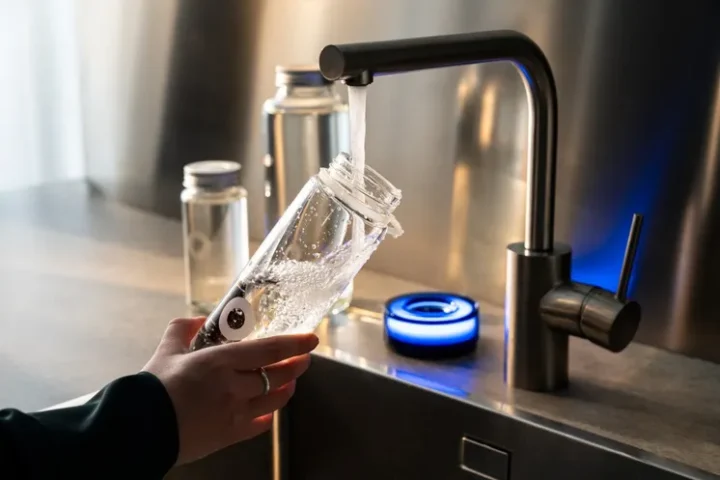
There’s something appealing about having your own well. You aren’t relying on a municipal supply, and the water comes straight from beneath the property. For many homeowners, that sense of independence is a real benefit.
But private well ownership comes with a responsibility that’s easy to overlook: you’re also responsible for understanding what’s in that water.
A glass can look perfectly clear and still contain minerals, metals, microorganisms, or other substances that affect taste, plumbing, or household use. And because groundwater conditions can vary from one property to another, the solution that works beautifully for one home may be completely wrong for the next.
That’s why good well-water management starts with curiosity rather than assumptions.
Your Well Water Has Its Own Personality
Groundwater passes through layers of soil and rock before reaching the well. Along the way, it can pick up naturally occurring minerals and other substances.
The local geology plays a major role. One property may have relatively soft water, while a nearby home experiences significant hardness. Another may struggle with iron staining or a sulfur-like odor.
This is why well water treatment should never be chosen simply because a neighbor uses a particular system.
Their water may be different.
Testing the water first gives you a much clearer picture of what you’re dealing with and what kind of treatment, if any, makes sense.
Water Testing Is the Sensible First Step
It’s tempting to shop for equipment as soon as something seems wrong.
Orange stains? Buy an iron filter. White deposits? Get a softener. Bad smell? Find an odor filter.
Sometimes those guesses happen to be right. Sometimes they aren’t.
A proper water test can provide useful information about characteristics such as hardness, pH, iron, sulfur-related compounds, and microbial concerns. The appropriate test depends on the well, location, and reason for testing.
For private wells, periodic testing is also important because conditions can change over time.
Think of it like checking the oil in your car. You don’t wait for the engine to make an awful noise before looking under the hood.
Common Signs That Your Well Water Needs Attention
Your household may give you clues before you even look at a laboratory report.
A metallic taste can sometimes be associated with iron or other minerals. Orange or reddish stains around sinks and toilets may point toward iron. A rotten-egg odor can be associated with hydrogen sulfide.
Hard water often leaves white scale on fixtures and glassware.
Cloudiness or visible particles may indicate sediment, although the cause should be investigated rather than assumed.
None of these signs automatically tells you whether the water is safe or unsafe. They’re simply reasons to take a closer look.
Understanding Well Water Systems
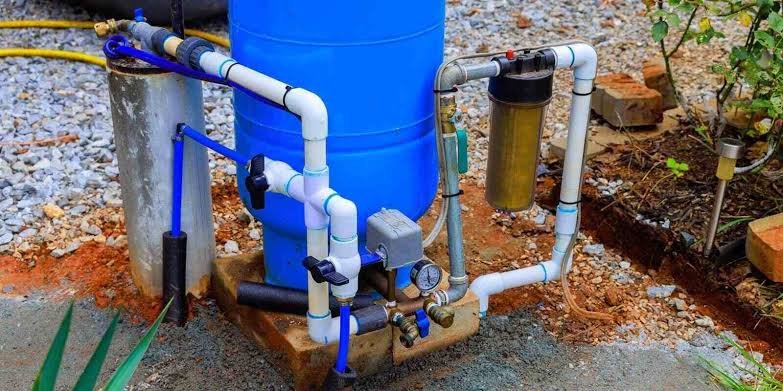
A private well is more than a hole in the ground with a pump attached.
The system can include the well itself, pump, pressure tank, plumbing, filtration equipment, softening equipment, storage components, and other treatment devices.
When well water systems aren’t properly maintained, problems can develop that have little to do with the groundwater itself.
For example, a pressure issue may affect flow. A clogged filter can reduce water pressure. A damaged component may allow contaminants to enter the system.
That’s why maintenance should consider the whole setup, not just the treatment equipment.
Hard Water Can Be a Long-Term Nuisance
Hardness is one of the most common complaints among well owners.
Calcium and magnesium are responsible for most naturally occurring water hardness. These minerals can create scale inside plumbing and water-using appliances.
You may notice it first as a ring around a faucet or spots on a glass. Over time, the deposits can become harder to remove.
A water softener may be appropriate when hardness is significant. But remember, softening and filtration aren’t interchangeable.
A softener primarily addresses hardness. It isn’t designed to remove every possible substance from the water.
Iron Can Make Clean Fixtures Look Dirty
Iron is another common well-water concern.
When iron is present at elevated levels, it can leave orange or brown stains in sinks, bathtubs, toilets, and laundry. Some forms of iron may also create a metallic taste.
Treatment depends on how the iron is present in the water and how much is there.
That’s why testing matters so much. An iron-treatment system should be selected according to actual conditions rather than simply based on the color of a stain.
Sometimes a relatively straightforward filtration approach is enough. Other situations require oxidation, specialized media, or multiple treatment stages.
Sulfur Odor Is Difficult to Ignore
Few water problems get noticed faster than a rotten-egg smell.
Hydrogen sulfide is a common cause of this odor, particularly in some well-water supplies. The smell may be stronger when using hot water.
Several treatment methods can be used depending on concentration and water chemistry. Aeration, oxidation, filtration, and other technologies may all have a role.
If the odor is persistent, testing is a better first move than trying random filters.
Don’t Assume Clear Water Means Perfect Water Quality
Appearance can be misleading.
Water may look crystal clear while containing dissolved substances that can’t be seen. Conversely, visible sediment doesn’t necessarily tell you whether the water contains other concerns.
Understanding water quality requires more than looking at a glass under the kitchen light.
Testing provides objective information, while regular observation can help you notice changes between tests.
For private well owners, that combination is useful. You know your normal water characteristics, so a sudden difference is easier to recognize.
Sediment Can Affect More Than Appearance
Sand, silt, and other particles may enter a well system under certain conditions.
Sediment can clog faucet aerators, affect filters, and create problems for other treatment equipment.
A sediment filter can help capture suspended particles before they travel farther through the plumbing.
However, filters need maintenance. Once a cartridge becomes loaded, flow can decrease significantly.
If you notice a sudden pressure drop, check the filter. It’s a small thing, but sometimes the simplest explanation is the right one.
Your Well Needs Physical Inspection, Too
Water testing is important, but don’t forget the well itself.
The well cap, casing, surrounding area, pump, and plumbing should be kept in good condition. Surface water and other environmental sources should be prevented from entering the well.
If flooding, construction, landscaping changes, or other events occur near the well, consider whether they could affect the supply.
A treatment system can’t compensate for every physical problem with the well.
Sometimes the source needs attention first.
Treatment Should Match Your Household
A system that works for a two-person household may not be ideal for a large family with several bathrooms.
Consider water usage, peak flow, storage capacity, plumbing layout, and the specific treatment goals.
You don’t necessarily need to treat every issue with one giant system.
A softener might handle hardness while a separate drinking-water filter addresses taste or dissolved substances. Sediment filtration may protect the rest of the equipment.
In some homes, several smaller components make more sense than one complicated unit.
Maintenance Is Part of Owning a Well
Private well ownership doesn’t end after installation.
Keep records of water tests. Replace filters according to manufacturer recommendations. Check equipment for leaks and unusual noises. Pay attention to changes in taste, odor, pressure, and appearance.
If a treatment system has multiple components, know what each one does and when it requires service.
It sounds like a lot, but once the routine is established, most of it becomes ordinary household maintenance.
Don’t Let One Bad Day Define Your Water
Groundwater can change, and wells can behave differently under changing conditions.
A strange taste after heavy rain doesn’t necessarily mean the well has failed. A little sediment doesn’t automatically indicate a major problem. But sudden changes are worth investigating.
The goal isn’t to worry about every small variation.
It’s to know your baseline, understand your equipment, and respond when something genuinely changes.
A Well Can Be a Great Water Source With the Right Attention
Private wells offer independence, but that independence comes with responsibility.
The best approach is surprisingly practical: test the water, understand the source, maintain the well and equipment, and choose treatment based on actual conditions.
Don’t buy a system simply because it worked for someone down the road. Don’t assume clear water is automatically problem-free. And don’t wait until a treatment system stops working before learning how it works.
When homeowners take the time to understand their wells, water treatment becomes much less mysterious.
You don’t need to become a water scientist. You just need good information, sensible maintenance, and equipment designed for your particular supply.
That little bit of attention can go a long way toward keeping your water dependable — and your household running without unnecessary surprises.