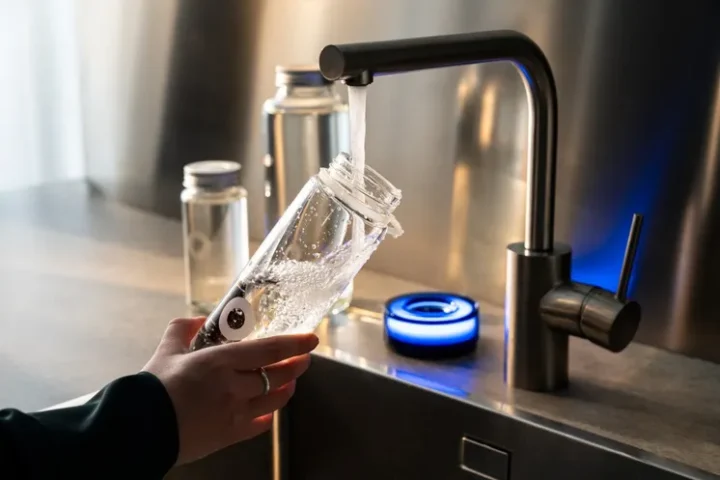
Water plays a bigger role in a workplace than people sometimes realize. Employees fill bottles between meetings, customers may ask for a glass of water, kitchens depend on reliable supplies, and equipment such as coffee makers and ice machines needs clean, consistent water to operate properly.
When the water has an unusual taste, leaves mineral deposits, or creates repeated maintenance problems, the issue quickly becomes more than a minor inconvenience. It can affect the way a business operates.
That doesn’t mean every company needs an elaborate treatment plant in the utility room. In fact, choosing too much equipment can be just as impractical as choosing too little. The smarter approach is to understand the water, understand the building, and select treatment that fits the actual demands.
Start With the Water Coming Into the Building
Before comparing equipment, find out what you’re dealing with.
Municipal water is treated before reaching commercial properties, but that doesn’t mean every building has identical water conditions. Plumbing age, building infrastructure, local mineral content, and other factors can influence what comes out of the tap.
A water analysis can identify characteristics such as hardness, sediment, chlorine, iron, pH, and total dissolved solids. Additional testing may be appropriate when there are concerns about specific contaminants.
This information gives a business something much more useful than a generic promise of “better water.” It provides a starting point for selecting appropriate treatment.
Why Commercial Filtration Needs to Be Different
A family of four and a busy restaurant don’t use water in quite the same way.
A commercial property may have dozens or hundreds of people using faucets throughout the day. A restaurant may use substantial quantities for food preparation, beverages, dishwashing, and ice. An office may have fewer fixtures but very high demand during certain hours.
A commercial water filtration system needs to account for flow rate, peak demand, pressure, water chemistry, and available space.
Sizing matters. A system that works beautifully in a small office may struggle in a facility where several fixtures operate at once.
This is one area where simply buying the biggest available unit isn’t necessarily the answer. Proper sizing is more useful than impressive-looking specifications.
Think About Where Treatment Is Needed
Not every business needs whole-building filtration.
Some companies primarily want better drinking water. Others are trying to protect equipment from hard water or improve water used in food preparation.
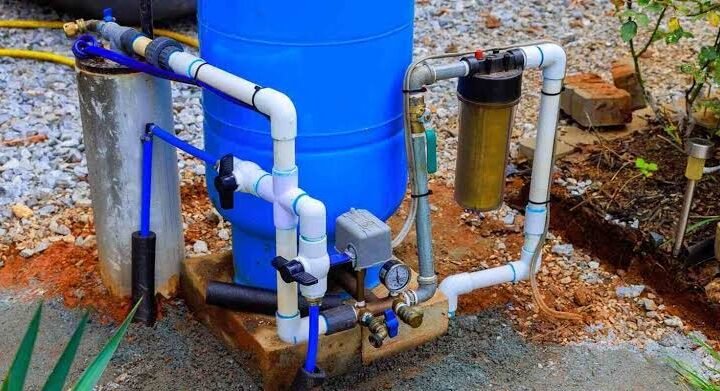
Point-of-use treatment can be practical when the concern is concentrated around drinking stations, break rooms, or kitchens. Point-of-entry treatment makes more sense when the goal is to address water throughout the building.
The decision comes down to purpose.
If the only complaint is unpleasant-tasting water in the break room, treating every gallon entering the property could be unnecessary. If scale is affecting plumbing and equipment across the facility, a broader approach may be justified.
Bottleless Systems Can Change the Workplace Routine
Traditional bottled water coolers have been a familiar sight in offices for decades. But they’re not always the most convenient option.
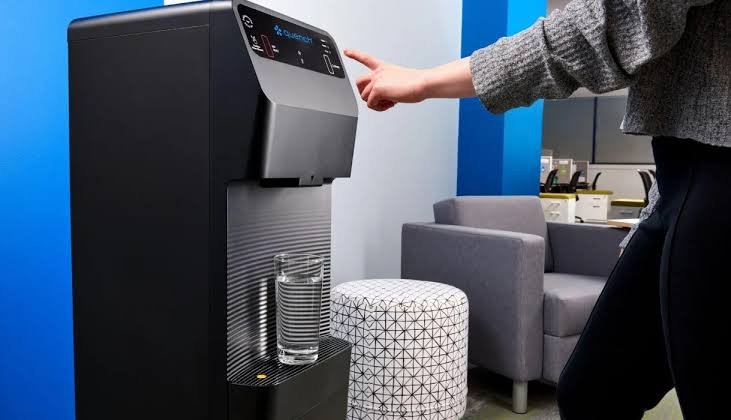
Bottleless water dispensers & coolers connect directly to the building’s water supply and use filtration to provide drinking water without repeatedly ordering and storing large bottles.
That can free up storage space and reduce the need for employees to move heavy containers around.
There are operational considerations, of course. Filters need replacement, equipment requires cleaning, and installation needs to be done properly. But for workplaces with steady drinking-water demand, a bottleless system can be a convenient alternative to delivered bottled water.
Sometimes convenience is the deciding factor.
Commercial Filtration Is About More Than Drinking Water
When people hear “filtration,” they often think about drinking water.
In a commercial environment, the benefits can extend further. Water quality can affect coffee equipment, ice machines, steam equipment, food-service appliances, and plumbing fixtures.
Hard water, for example, may contribute to scale formation. Sediment can clog small components. Certain water characteristics can affect taste, odor, or equipment performance.
Well-designed commercial filtration systems can be configured for different purposes, depending on the building’s water and operational requirements.
The important part is matching the treatment technology to the issue rather than assuming one filter handles everything.
Hard Water Can Become an Equipment Problem
Hard water isn’t usually dangerous simply because it’s hard, but it can be expensive to ignore in a commercial setting.
Calcium and magnesium can form deposits when water is heated or evaporates. In a business that operates coffee machines, dishwashers, water heaters, or other equipment continuously, mineral buildup can become a recurring maintenance concern.
Water softening or scale-control technology may help, depending on the water chemistry and the equipment involved.
Before installing anything, test the hardness level. There’s little value in paying for treatment if the actual hardness isn’t causing meaningful problems.
Taste Matters More Than Businesses Sometimes Think
Employees notice bad-tasting water.
A strong chlorine taste or unpleasant odor can discourage people from using workplace drinking stations. That means employees may turn to bottled beverages or simply drink less water during the day.
Carbon filtration is commonly used to improve taste and odor by reducing certain compounds, including chlorine, depending on system design.
For offices, gyms, hospitality businesses, and customer-facing locations, this can make a surprisingly noticeable difference.
People don’t need a lecture about hydration when the water tastes good. They simply use the dispenser.
Don’t Ignore Flow Rate
A filtration system can produce excellent water and still be a poor commercial choice if it can’t keep up with demand.
Flow rate is particularly important in busy environments. If multiple fixtures operate simultaneously, an undersized system may restrict water delivery.
When evaluating equipment, consider both normal usage and peak periods. A restaurant during lunch service, an office first thing in the morning, or a hotel during breakfast can place very different demands on a water system.
Good sizing considers those real-world moments—not just average daily consumption.
Installation Should Fit the Building
Commercial properties aren’t always designed with water-treatment equipment in mind.
There may be limited mechanical-room space, complicated plumbing, difficult access, or drainage requirements. Electrical connections may also be necessary for certain equipment.
Professional installation can help ensure that the system is correctly connected, accessible for service, and installed according to applicable requirements.
Accessibility deserves special attention. A filter that’s impossible to reach will eventually become a maintenance headache.
Maintenance Keeps the Investment Working
Even excellent equipment needs attention.
Filters eventually reach capacity. Membranes require replacement. Softening systems may need regeneration materials and service. Dispensers need cleaning and sanitation.
Commercial environments may require more frequent maintenance because of higher water usage.
Businesses should establish a clear service schedule rather than waiting until water quality or equipment performance noticeably declines.
Keeping records is useful too. Filter-change dates, service visits, and water-testing results can help facility managers understand how the system is performing over time.
Consider the Total Cost, Not Just the Equipment
The initial purchase price tells only part of the story.
A business should also consider installation, replacement filters, maintenance, electricity, water usage, service calls, and potential downtime.
A slightly more expensive system may prove more economical if it has better capacity, longer filter life, easier maintenance, or stronger support.
Likewise, an inexpensive system can become costly if employees constantly need to replace cartridges or deal with reduced flow.
Think in years, not weeks.
A Practical System Is Usually the Best System
Commercial water treatment doesn’t need to be unnecessarily complicated.
Start with testing. Understand the building’s demand. Identify whether the priority is drinking water, taste, scale control, equipment protection, or something else. Then choose technology and capacity around those needs.
For some businesses, a bottleless dispenser may solve the main problem. Others may need whole-building filtration or water softening. Food-service operations may require more specialized treatment.
There isn’t one universal answer.
The best system is the one that quietly does its job while fitting the business’s budget, workflow, and maintenance capabilities.
Water is easy to take for granted when everything is working. But in a busy commercial environment, reliable water quality can make the difference between another routine workday and a string of small frustrations.
Get the basics right—test the water, size the equipment properly, install it thoughtfully, and maintain it on schedule. After that, the system should fade into the background, which is probably the highest compliment a piece of commercial equipment can receive.