Water is one of those things you don’t think much about until it starts causing trouble. A shower leaves spots on the glass. Soap doesn’t seem to rinse properly. The coffee tastes a little strange. Maybe the water has an odor that wasn’t there a few months ago.
None of these issues necessarily means your water is unsafe, but they can be signs that something about your water chemistry deserves a closer look.
The good news is that homeowners have more treatment options than ever. The tricky part is knowing which one actually makes sense. Water softeners, whole-home filtration, and reverse osmosis systems all do different jobs. Choosing between them isn’t simply a matter of picking the system with the longest list of features.
Start with the water itself. Once you understand what you’re trying to improve, the decision gets much easier.
Hard Water Is More Than an Annoyance
Hard water is common in many homes and is generally associated with dissolved calcium and magnesium.
You may notice the effects around the house before you ever think about the chemistry. Faucets develop white mineral deposits. Shower doors become difficult to keep clean. Laundry can feel less soft, and soap may struggle to produce the satisfying lather you’re used to.
Over time, mineral deposits can also accumulate inside plumbing and appliances.
For households dealing primarily with hardness, water softeners & refiners can provide a practical solution. A conventional water softener uses an ion-exchange process to reduce hardness minerals in the water.
The important thing is to match the equipment to the actual hardness level and household demand. Bigger isn’t automatically better.
Filtration Has a Different Purpose
A water filter and a water softener aren’t interchangeable.
Filtration generally targets particles, certain chemicals, tastes, odors, or other specific substances depending on the filter media and design. Softening, on the other hand, is primarily concerned with hardness minerals.
This distinction matters because homeowners sometimes expect one piece of equipment to solve every water problem.
It usually doesn’t.
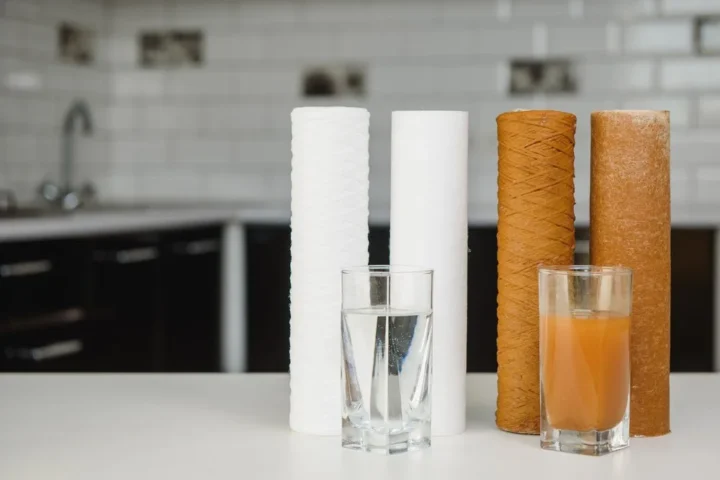
If your water has sediment, chlorine taste, sulfur odor, iron, or another specific characteristic, the appropriate filter needs to be selected for that particular issue.
The best treatment plan isn’t necessarily the most complicated one. It’s the one that does the job you’re actually asking it to do.
When Whole-Home Filtration Makes Sense
If the water problem affects every faucet in the house, point-of-use filtration may not be enough.
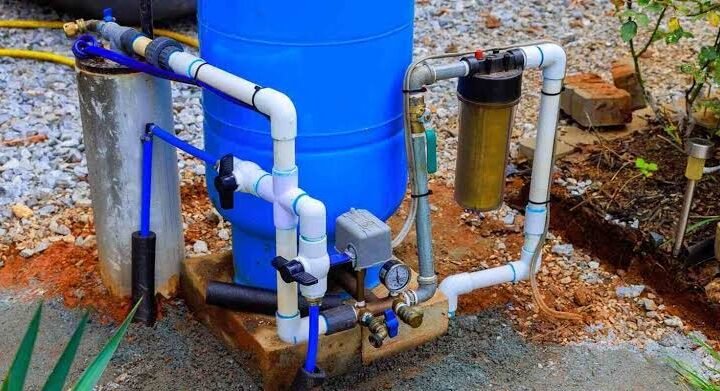
Whole-home water filtration treats water as it enters the property or at another central point, allowing treated water to travel through the home’s plumbing.
That can be useful when the goal is to improve water throughout the house rather than only at a drinking-water faucet.
Imagine dealing with sediment that keeps appearing in multiple fixtures. Installing a small filter under the kitchen sink won’t do much for the shower, washing machine, or other taps.
A whole-home approach may be more practical in that situation.
Still, system selection matters. A filter designed for sediment isn’t necessarily designed for dissolved contaminants, and a carbon system won’t solve every mineral problem.
Your Water Source Should Guide the Decision
Municipal water and private well water can present very different treatment considerations.
City water is generally treated and monitored before it reaches your home. Some homeowners still choose additional filtration because of taste, odor, hardness, or concerns related to their plumbing.
Well water requires a little more detective work.
Groundwater chemistry can vary from one property to another. Iron, manganese, sulfur compounds, hardness, sediment, and other characteristics may occur depending on local conditions.
Testing provides the clearest starting point.
Rather than buying a system because a neighbor swears by it, find out what is actually in your water. Their well may be only a few hundred feet away and still have a different chemistry.
Reverse Osmosis Takes Treatment Further at the Tap
Some homeowners want a higher level of treatment specifically for drinking and cooking water.
That’s where reverse osmosis drinking water systems can be useful.
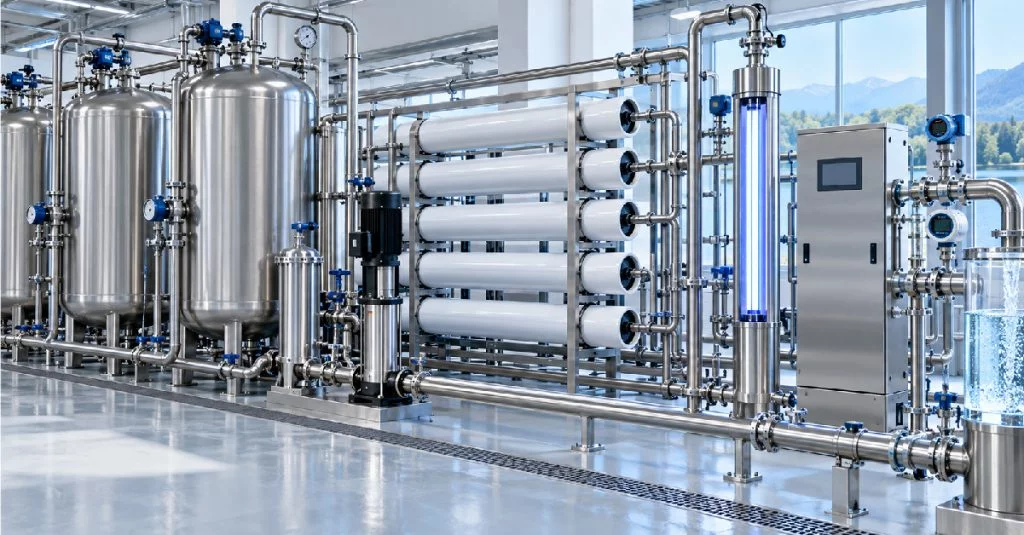
RO uses pressure to push water through a semipermeable membrane, reducing many dissolved substances along the way. Systems commonly include prefilters to protect the membrane and a post-treatment stage for the finished water.
Because RO is typically installed as point-of-use treatment, it can focus on the water you drink without requiring the entire household supply to pass through the membrane.
That can be a sensible choice when your primary concern is drinking water rather than bathing or laundry water.
RO Isn’t Automatically the Right Answer
Reverse osmosis is impressive technology, but it isn’t necessary for every home.
If the main issue is hard water, a softener may be the more appropriate solution. If you’re dealing with chlorine taste, carbon filtration may be enough.
RO systems also require maintenance, including filter and membrane replacement. Traditional RO systems may produce a reject-water stream, so efficiency is another factor worth considering.
The point isn’t to avoid RO. It’s to use it where it provides meaningful value.
A treatment system should solve a problem, not create a new one simply because the technology sounds sophisticated.
Think About What You Want to Improve
Before shopping for equipment, make a short list.
Are you trying to eliminate scale? Improve drinking-water taste? Reduce sediment? Address an identified contaminant? Protect appliances? Treat water throughout the house?
Those questions can narrow the field considerably.
A household with severe hardness might benefit from softening at the point of entry and separate drinking-water filtration at the kitchen sink.
Another home might need whole-home filtration because sediment or odor affects every fixture.
Someone else may only need a simple faucet or under-sink filter.
There isn’t a universal setup.
Maintenance Is Part of the Deal
Every treatment system comes with some responsibility.
Softener salt or media needs attention. Filters have finite capacities. RO membranes eventually need replacement. Valves, pumps, tanks, and other components may require inspection.
Skipping maintenance can quietly reduce performance.
This is why it’s worth asking about ongoing requirements before installation. Find out how often components need to be replaced, what those parts cost, and whether service is readily available.
A system that’s easy to maintain is far more likely to be maintained.
That sounds obvious, but it’s an easy detail to overlook when you’re focused on installation price.
Consider Water Pressure and Flow
Treatment equipment needs to fit your home’s plumbing conditions.
If several showers, faucets, or appliances can operate at once, the system needs enough capacity to keep up. Some equipment can also affect pressure depending on its design and condition.
RO systems have their own pressure requirements, and homes with lower incoming pressure may need additional equipment.
Don’t judge capacity solely by the number of people living in the house. Think about how your household actually uses water.
A family of four with teenagers taking back-to-back showers has very different peak demand from two adults who spend most weekdays away from home.
Real usage matters.
Don’t Forget the Cost Over Time
The purchase price is only one part of the equation.
Consider replacement filters, salt, electricity, wastewater, service visits, and other recurring expenses.
A cheaper system isn’t necessarily cheaper over five or ten years.
On the other hand, an expensive system isn’t automatically a better investment.
Look for a reasonable balance between performance, maintenance, durability, and operating cost.
If a provider gives you a recommendation, ask them to explain why that particular system fits your water and household. A clear explanation is often more useful than a long brochure full of technical terms.
Start With Testing, Then Choose Your Equipment
The smartest water-treatment decisions usually begin with information.
Test the water. Review your municipal water report if you’re on city water. If you’re using a private well, establish a testing routine and keep records of the results.
Then decide what needs to be improved.
Softening can be excellent for hardness. Whole-home filtration can address certain problems throughout the property. Reverse osmosis can provide more extensive treatment for drinking and cooking water.
Sometimes these technologies can complement each other. Sometimes one simple solution is enough.
The goal isn’t to install every available technology under your sink or in your garage.
It’s to create a treatment setup that fits your water, your household, and your expectations.
When you approach the decision that way, cleaner water becomes less about chasing the latest equipment and more about solving the right problem. And honestly, that’s the approach that tends to make the most sense in the long run.