Water treatment isn’t one of those purchases people make because it’s fun. Nobody wakes up excited to compare filter cartridges or study water chemistry over breakfast.
Usually, there’s a reason behind it.
Maybe the shower is covered in scale. Maybe the kitchen tap leaves an unpleasant taste. A business might be dealing with mineral buildup in equipment, while a homeowner is tired of replacing fixtures that seem to collect deposits almost overnight.
Whatever the reason, the smartest approach is to look beyond the symptoms and understand what the water actually needs.
The right treatment can make daily life easier, protect plumbing and equipment, and improve the experience of using water. The wrong one can become an expensive piece of equipment that doesn’t solve much at all.
Every Property Has Different Water Needs
A small family home and a busy commercial building obviously don’t use water in the same way.
Homes typically have predictable patterns built around showers, laundry, cooking, cleaning, and drinking. Commercial properties may have kitchens, bathrooms, manufacturing equipment, cooling systems, or other processes that demand considerably more water.
That’s why residential and commercial water treatment solutions should be selected according to the property’s actual requirements rather than simply choosing a system based on its size or price.
Flow rate, daily consumption, incoming water quality, available installation space, and maintenance needs all matter.
A system that’s perfect for a three-person household may be completely inadequate for a business with dozens of employees.
Start With Testing, Not Guesswork
It’s tempting to shop for treatment equipment based on something you can see.
White scale usually means hard water, right? Orange stains must mean iron. A chlorine smell means you need carbon filtration.
Sometimes those assumptions are correct. Sometimes there’s more going on.
Water testing provides a better foundation. Depending on the water source and the concerns involved, testing may examine hardness, pH, iron, manganese, dissolved solids, chlorine, nitrates, or other characteristics.
The results help narrow down the treatment options.
It also prevents you from paying for equipment that targets a problem you don’t actually have.
Hard Water Is a Familiar Household Frustration
Hard water can be surprisingly persistent.
Calcium and magnesium naturally occur in many water sources. At higher concentrations, they can form scale on faucets, showerheads, glassware, water heaters, and appliances.
Soap can also behave differently in hard water. You may use more of it and still feel like it isn’t rinsing as cleanly.
Water softening is commonly used to reduce hardness throughout a property.
For homeowners, the benefits can be noticeable in everyday cleaning. For businesses, reducing scale may help protect certain water-using equipment and reduce maintenance demands.
It’s not glamorous technology, but it can make a real difference.
What Are Water Refiners?
The term “refiner” can mean different things depending on the provider and equipment being discussed.
Some water refiners are designed as multi-purpose systems that combine treatment approaches to improve characteristics such as hardness, taste, odor, or other water-quality concerns.
This is why it’s worth looking past the name on the equipment.
Ask exactly what the system is designed to reduce. Find out which treatment media or technologies it uses and what maintenance is required.
A fancy product name doesn’t tell you nearly as much as a clear explanation of what the equipment actually does.
Carbon Filtration Has a Practical Purpose
If your main complaint is taste or odor, carbon is often one of the first treatment technologies worth discussing.
Carbon filtration works through adsorption, allowing carbon media to capture or reduce certain substances as water passes through it.
It is commonly used for improving taste and odor associated with chlorine and certain organic compounds.
But carbon filtration isn’t designed to solve every water problem.
It doesn’t automatically remove all minerals, hardness, or every contaminant. The performance depends on the carbon type, system design, contact time, incoming water, and maintenance.
Again, the treatment needs to match the water.
Drinking Water and Whole-House Water Are Different
Not every water concern requires the same level of treatment at every faucet.
A homeowner might be perfectly satisfied with treated water for showers and laundry but want additional filtration for drinking and cooking.
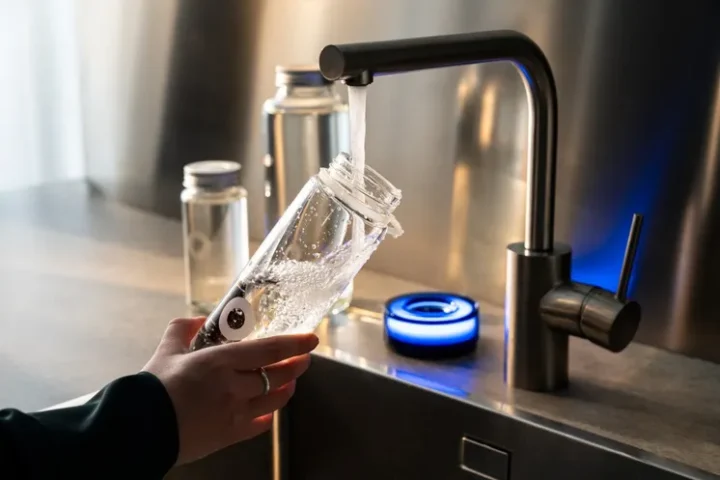
A point-of-use system under the kitchen sink can provide targeted treatment in that situation.
Reverse osmosis is another option often considered when testing identifies dissolved substances that call for more extensive treatment.
On the other hand, if hardness or sediment is affecting the entire plumbing system, treating only the kitchen faucet won’t address the underlying problem.
The right choice depends on where the problem exists and what you’re trying to accomplish.
Commercial Properties Have More at Stake
Water quality can have operational consequences for businesses.
Mineral deposits can affect equipment. Scale may increase maintenance needs. Unpleasant water can be an issue for restaurants, hotels, offices, healthcare facilities, and other customer-facing environments.
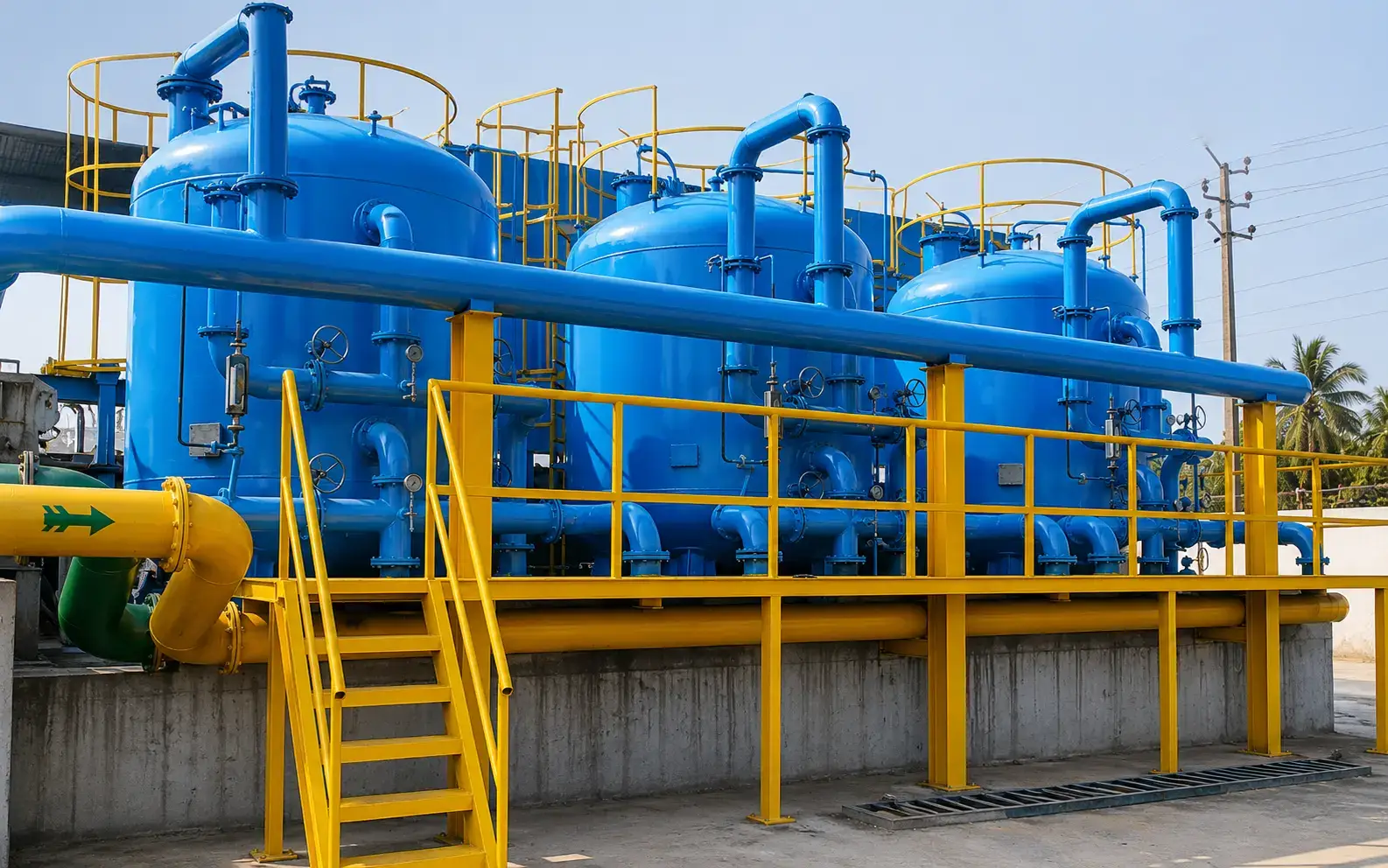
Manufacturing and industrial operations can have even more specific requirements because water may be part of a process rather than simply something employees drink.
In these settings, treatment should be designed around the application’s needs.
A commercial water-treatment evaluation may consider peak demand, continuous flow, equipment specifications, and process requirements—not just what’s coming from the drinking fountain.
System Capacity Matters
One of the easiest things to overlook is capacity.
A treatment system needs to handle the amount of water your property actually uses.
If a home’s water demand is concentrated in the morning, the system should be able to keep up when several fixtures operate at once. A commercial system may need to accommodate much higher and more consistent demand.
Flow rate is especially important for whole-house treatment.
An undersized system can create pressure and performance problems. An oversized system may cost more than necessary.
The goal is balance.
Installation Is Part of the Solution
Even excellent equipment won’t perform properly if it’s poorly installed.
Water pressure, plumbing connections, drain requirements, electrical access, and available space all need to be considered.
Maintenance access matters too.
If a filter housing is tucked somewhere impossible to reach, you’ll probably delay changing it. That’s not a great recipe for long-term performance.
A thoughtful installation considers what happens six months or two years later, not just whether the system turns on today.
Maintenance Keeps Treatment Working
Every treatment system has some form of maintenance.
Filters need replacement. Carbon media eventually becomes exhausted. Water softeners may require salt. Reverse osmosis membranes wear out. Valves and other components can also need inspection.
Skipping maintenance can gradually reduce performance.
Create a simple service schedule and keep records of filter changes. If you’re managing treatment for a business, documenting maintenance is even more important because equipment downtime can have operational consequences.
A little routine attention is much easier than dealing with a preventable failure.
Look at the Long-Term Cost
The purchase price is only one piece of the financial picture.
Consider installation, replacement filters, media, electricity, salt, service visits, and other operating costs.
A system that costs slightly more upfront may be cheaper over its useful life if it has reasonable maintenance requirements and readily available replacement parts.
Likewise, don’t assume an expensive system is automatically better.
Ask what you’re paying for.
If a feature doesn’t solve a real problem or make ownership easier, it may not be worth the additional cost.
Choose Treatment Based on Your Priorities
Water treatment should support the way you actually use water.
A homeowner may care most about clean showers, better-tasting drinking water, and protecting appliances. A restaurant may be more concerned with consistent water quality and equipment performance. An office may simply want pleasant-tasting water for employees.
Those are different priorities.
There’s nothing wrong with keeping a system simple when simple is enough.
In fact, simpler equipment can sometimes be easier to maintain and understand.
The Best Treatment Is the One That Makes Sense
Choosing water treatment doesn’t have to feel like navigating a maze of technical terms and competing promises.
Start with testing. Understand your water source. Think about how much water the property uses and what you want to improve. Then compare technologies based on those needs.
Don’t choose equipment because it has the most stages or the biggest tank.
Choose it because it has a clear job to do.
When treatment is properly matched to the water, the benefits tend to become pleasantly unremarkable. Faucets stay cleaner. Equipment behaves better. Drinking water tastes better. Maintenance becomes more manageable.
And eventually, you stop thinking about the treatment system altogether.
That’s usually a sign you’ve chosen well.