You wash the dishes. They look clean when they come out of the dishwasher. Then the light hits a glass at just the right angle and—there they are again. Those cloudy little marks that somehow make perfectly clean dishes look dirty.
It’s frustrating, especially when you’ve already run the dishwasher, used plenty of detergent, and maybe even cleaned the machine itself. The problem, however, may not be the dishwasher at all. In many homes, the culprit is hard water.
Hard water is common, and in most situations it isn’t considered a health problem. But it can be a persistent nuisance around the house. It affects fixtures, appliances, laundry, showers, and yes, those seemingly impossible-to-clean glasses.
Understanding why it happens is the first step toward deciding whether water treatment is worth considering.
What Exactly Is Hard Water?
Hard water contains dissolved minerals, primarily calcium and magnesium. These minerals naturally enter water as it moves through soil and rock, especially in groundwater supplies.
When water evaporates from a surface, the minerals can remain behind. That’s why you may see white or cloudy deposits around faucets, shower doors, sinks, and other areas where water regularly dries.
The issue can become especially noticeable when there are high levels of calcium and magnesium in water. The higher the mineral concentration, the more likely you are to notice scale and other household effects.
Hardness isn’t necessarily something you can identify just by looking at a glass of water. Clear water can still be quite hard.
Why Dishes and Glassware Show It So Clearly
Dishwashers use heat, detergent, and water to clean your dishes. After the final rinse, however, some of that water remains on the surface before it evaporates.
If the water is hard, dissolved minerals can be left behind.
That’s when those familiar spots on dishes and glassware appear.
Glasses are particularly annoying because transparent surfaces make mineral deposits easy to see. You might notice a cloudy film or tiny white marks that become more obvious after repeated washing.
Increasing detergent isn’t necessarily the answer. In fact, using too much detergent can sometimes create its own problems.
The underlying water chemistry deserves attention.
Hard Water Can Affect More Than the Kitchen
The dishwasher gets most of the attention because the evidence is so visible, but hard water can affect other parts of the house.
Mineral scale may build up inside faucets and showerheads. Water heaters can accumulate deposits over time. Soap may not rinse away as easily, and some people notice that their skin or hair feels different after bathing.
Laundry can also be affected. Clothes may feel less soft, and repeated washing in hard water can contribute to a dull appearance.
None of these effects necessarily happen overnight. That’s part of what makes hard water easy to ignore.
The changes are gradual, so homeowners often adapt without realizing how much extra cleaning or maintenance they’re doing.
A Simple Water Test Can Tell You More
If you’re unsure whether hardness is actually the issue, testing the water is a sensible place to start.
Water-hardness testing can measure the concentration of calcium and magnesium and provide a clearer picture of what your household is dealing with.
This is particularly useful for private-well owners because groundwater conditions can vary from one property to another. Municipal water can also have measurable hardness, of course, but the source and treatment history are different.
Testing helps prevent guesswork.
If hardness is low, buying a water softener may not provide much benefit. If hardness is high, however, treatment could make a noticeable difference in everyday household maintenance.
How Water Softeners Work
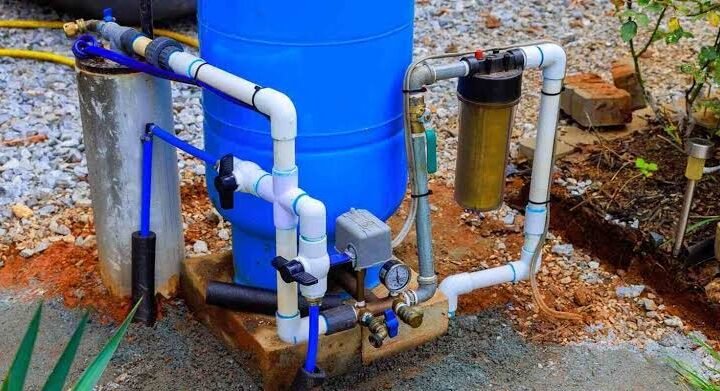
Traditional softening systems use a process called ion exchange.
Inside the softener is resin designed to attract calcium and magnesium ions. As water passes through the resin, those hardness minerals are exchanged for other ions, commonly sodium or potassium depending on the system.
Over time, the resin becomes loaded with hardness minerals and needs to be regenerated.
This is where salt-based water softeners come into the conversation. These systems use salt during the regeneration process to restore the resin’s ability to exchange hardness minerals.
They can be highly effective for homes with significant hardness, but they do require regular maintenance and a supply of the appropriate salt.
Choosing the Right Size Matters
A softener shouldn’t be chosen simply because it has a large tank.
Household water consumption, water hardness, and peak demand all influence the appropriate size and configuration.
A small household with moderate hardness may have very different requirements from a large family with high water consumption.
An oversized system isn’t automatically a better investment. It may cost more upfront and take up additional space without providing meaningful benefits.
Proper sizing can help the equipment operate efficiently while keeping long-term maintenance manageable.
What About Salt-Free Alternatives?
You may also hear about salt-free water-conditioning systems.
These products generally work differently from traditional ion-exchange softeners. Many are designed to condition or alter the behavior of hardness minerals rather than actually removing calcium and magnesium from the water.
That distinction matters.
If your primary goal is preventing scale, a conditioning system may be worth investigating depending on your situation. If you specifically want hardness minerals removed, a traditional softening approach works differently.
Don’t assume that two products called “water softeners” necessarily do the same thing.
Hard Water and Your Water Heater
Water heaters deserve special attention because they repeatedly heat large amounts of water.
Heating can encourage mineral deposits to accumulate inside the tank or on heating components. The exact impact depends on the equipment, water chemistry, and operating conditions.
Over time, deposits can affect performance and efficiency.
Routine water-heater maintenance and appropriate treatment can help reduce some of the problems associated with mineral-rich water. However, treatment isn’t a substitute for maintaining the appliance itself.
It’s better to think of water quality and appliance maintenance as two parts of the same picture.
Don’t Ignore Existing Plumbing Issues
Hard water can contribute to mineral buildup, but not every plumbing problem is caused by hardness.
Low pressure, leaks, clogged pipes, failing valves, and aging fixtures can have completely different causes.
If your water suddenly changes, don’t automatically assume the hardness level has increased.
Look for other clues. Is the problem affecting one faucet or the entire house? Did it appear suddenly or gradually? Has water pressure changed?
A professional diagnosis can be useful when the symptoms don’t have an obvious explanation.
Is Softening Worth It?
For some households, absolutely.
If hard water is creating persistent scale, affecting appliances, making cleaning frustrating, or causing other noticeable problems, treatment may be worth the investment.
But it should be based on actual water conditions.
Start with testing. Understand the hardness level. Consider household water use and maintenance requirements. Then compare treatment options based on what they actually do.
Don’t buy a system simply because someone says every home needs one.
The Smallest Problems Can Be the Most Telling
Those spots on your favorite glasses may seem like a minor household annoyance. In many homes, they are simply a visible reminder of what’s happening in the water.
Hard water doesn’t have to be a crisis to deserve attention.
Sometimes the best reason to address it is simply quality of life. Cleaner-looking dishes. Less scale around faucets. Easier cleaning. Better protection for water-using appliances.
The goal isn’t to make your water “perfect.” It’s to understand what you’re dealing with and decide whether treatment would genuinely improve the way your home works.
Because when a glass comes out of the dishwasher looking like a glass again, that’s a surprisingly satisfying little victory.