Water is one of those household essentials that rarely gets much attention until something starts going wrong. A glass may taste slightly different. The showerhead might develop a crusty white coating. Laundry doesn’t seem quite as fresh. Maybe there’s an odd smell that comes and goes, and you find yourself wondering whether it’s the plumbing or the water itself.
These signs don’t always point to a serious problem, but they are worth paying attention to. Water quality can affect the way your home feels, how appliances perform, and how much time you spend cleaning fixtures.
The sensible response isn’t to panic or buy the first filter you see online. It’s to understand the water, identify the issue, and then choose treatment that fits.
Start With a Simple Water Investigation
Before choosing equipment, learn what is actually in the water. Some concerns are easy to spot, while others aren’t visible at all.
A water test can measure characteristics such as hardness, pH, iron, manganese, sediment, and bacteria. Depending on the location and water source, testing may also include nitrates or other contaminants of concern.
For homes using private wells, regular testing is especially important. Groundwater conditions can change over time due to weather, nearby land use, agricultural activity, flooding, or other environmental factors.
Testing isn’t the most exciting part of home improvement, admittedly. But it can save you from solving the wrong problem.
Don’t Treat Every Water Problem the Same Way
A water treatment system should be selected according to the specific conditions in your home. That’s an important distinction because different treatment technologies are designed for different jobs.
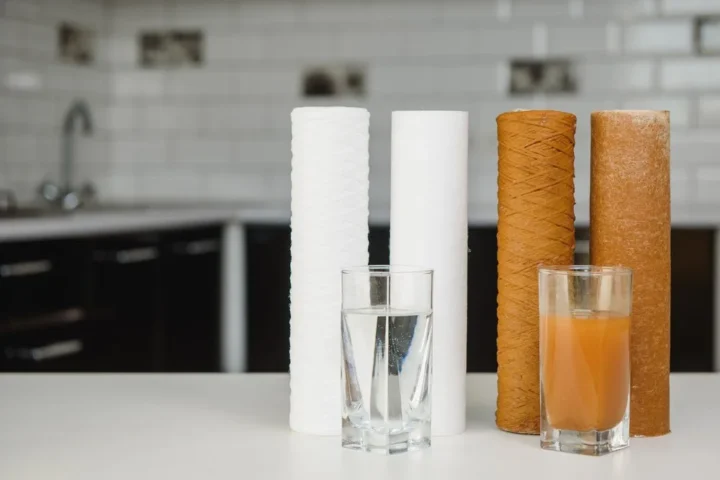
A softener is generally used to address hardness minerals. Sediment filters capture suspended particles. Activated carbon can help with certain tastes and odors. Reverse osmosis can reduce many dissolved substances from drinking water.
There are also systems designed for specific concerns, including iron, sulfur odors, or microorganisms.
The point is not to install every technology available. It’s to use the technology that makes sense for the water you actually have.
Why Hard Water Gets So Much Attention
Hard water is a common reason homeowners begin searching for treatment options. It contains elevated levels of minerals such as calcium and magnesium, which can create scale.
The first signs might seem harmless. A white ring around the faucet. Spots on glassware. A showerhead that needs cleaning more often than you’d like. Over time, though, mineral deposits can accumulate inside plumbing and water-using appliances.
A properly sized water softener can help reduce hardness and the scale associated with it. Many homeowners also notice that soaps and detergents behave differently once excessive hardness is reduced.
Hardness isn’t necessarily something to fear. In many cases, it’s more of a practical household issue than a health concern. Still, if it is causing ongoing problems, there’s no reason to simply accept it.
Professional Testing Gives You Better Information
Home testing kits can be useful for basic screening, but professional water testing can provide a more complete picture when you’re trying to select treatment equipment.
A professional evaluation may help identify the concentration of specific minerals or contaminants and can provide information needed to properly size treatment equipment.
This is particularly useful when the water has multiple symptoms. Suppose you have staining, an odor, and scale at the same time. It would be easy to assume they’re all caused by one thing. They may not be.
A detailed test can help separate the issues and prevent you from spending money on a treatment system that addresses only one symptom.
Think About Where Treatment Is Needed
Not every water concern requires whole-house treatment.
If the main issue involves drinking and cooking water, a point-of-use reverse osmosis system may be enough. It can provide treated water at a specific faucet without treating water used for showers, toilets, or laundry.
But if the water creates scale throughout the house, leaves sediment in several fixtures, or causes odors during showers, a whole-home approach may make more sense.
There’s no universal answer here. The best choice depends on the water conditions and what you want to improve.
Household Size Changes the Equation
Water treatment equipment needs to keep up with demand.
A two-person household has different requirements from a family of six. Peak usage matters too. If several people are showering, the washing machine is running, and someone is filling a bathtub, the system needs sufficient capacity and flow.
Oversizing isn’t necessarily better. An unnecessarily large system can cost more and may require additional resources to operate and maintain.
Proper sizing takes household water use, flow requirements, water quality, and available installation space into account.
It may not sound exciting, but this behind-the-scenes calculation can make a noticeable difference in system performance.
Installation Deserves Some Attention
Even quality equipment can disappoint if it’s installed incorrectly.
The system needs to be connected properly to the home’s plumbing, drainage, and electrical requirements where applicable. Settings should also reflect the water conditions and household usage.
Professional installation can help reduce common setup problems and gives homeowners an opportunity to learn how the equipment works.
You should know what the controls do, what needs replacing, and what changes in water quality should prompt a service call. Nobody wants to discover the hard way that a warning light has been blinking for three months.
Maintenance Keeps Treatment Working
Water treatment equipment needs routine care. Filters don’t last forever, membranes eventually need replacement, and softeners may require salt and periodic adjustments.
Maintenance schedules vary by system, water quality, and household usage. A filter serving a home with heavy sediment may need attention sooner than one in a cleaner water source.
Keep a simple record of service dates and replacement parts. If you notice reduced pressure, unusual taste, returning odors, or changes in water appearance, investigate rather than ignoring the signs.
Often, the system isn’t failing. It simply needs maintenance.
Be Careful With One-Size-Fits-All Claims
The water treatment market has no shortage of impressive promises. Some products claim to solve almost every water problem with one compact device.
Real water quality is usually more complicated.
Before buying, ask what the system is specifically designed to remove. Ask whether it has appropriate certifications, how often components need replacement, and what ongoing maintenance will cost.
Most importantly, ask whether the recommendation is based on your water test results.
A trustworthy provider should be able to explain the reasoning without drowning you in technical language.
Better Water Is About More Than a Filter
When people think about water treatment, they often focus on drinking water. That’s understandable, but household water quality affects much more.
It can influence appliance maintenance, cleaning routines, plumbing performance, laundry, bathing, and everyday comfort.
The right treatment can reduce the small annoyances that gradually become part of your routine. Less scale. Fewer deposits. Better-tasting water. Less time spent wondering why the faucet looks dirty again two days after you cleaned it.
Those aren’t flashy benefits, but they’re real.
Choose Based on Facts, Not Guesswork
The smartest water treatment decisions usually follow a straightforward path: test the water, understand the results, identify your priorities, choose suitable technology, and maintain the equipment properly.
You don’t need the biggest system. You don’t need every available filtration stage. And you certainly don’t need to become a water-treatment engineer overnight.
You just need information and a solution that matches your home.
Once the right system is installed and maintained, water treatment should become almost invisible. You turn on the tap, take a shower, wash a plate, or fill your coffee maker without wondering what’s happening inside the pipes.
That’s the real measure of good water treatment—not how complicated the equipment looks, but how quietly and reliably it improves everyday life.