You usually don’t notice water when it’s doing its job. You turn on the shower, wash the dishes, fill the kettle, and move on. Water is supposed to be one of those background necessities of life.
Then the faucet starts looking chalky.
Your glasses come out of the dishwasher covered in spots. Soap seems to disappear without producing much of a lather. The showerhead develops a crusty ring that requires more scrubbing than you’d care to admit.
These are some of the everyday signs associated with hard water. They may seem minor at first, but over time, mineral deposits can affect fixtures, appliances, cleaning routines, and even household maintenance costs.
The good news is that hard water is a manageable issue. The trick is understanding what you’re dealing with before spending money on treatment equipment.
Why Hard Water Leaves Such a Mess
Hard water contains dissolved minerals, mainly calcium and magnesium. Groundwater often picks up these minerals as it moves through rock and soil, which is why hardness levels can vary considerably from one area to another.
The minerals aren’t necessarily visible while they’re dissolved in the water.
The trouble begins when water evaporates or is heated. Minerals can remain behind and gradually form deposits on surfaces and inside equipment.
Over time, hard water & scale buildup can become particularly noticeable around faucets, showerheads, water heaters, dishwashers, coffee makers, and other fixtures or appliances that regularly come into contact with water.
A little buildup may only be irritating. A lot of buildup can become a maintenance issue.
Your Shower Can Tell You Quite a Bit
Bathrooms are often where homeowners first recognize hard water.
If you’ve cleaned the shower glass and watched white spots return almost immediately, you’re familiar with the frustration. Mineral residue can also collect around faucet aerators and showerhead openings, sometimes affecting the way water flows.
Regular cleaning can remove existing deposits, but it doesn’t address the source.
That’s an important distinction. Scrubbing harder isn’t necessarily the answer when the same minerals are arriving every time you turn on the tap.
If deposits keep returning, it may be worth having the water tested to determine whether hardness is contributing to the problem.
What Does a Water Softener Actually Do?
A traditional softener is designed to reduce calcium and magnesium in water.
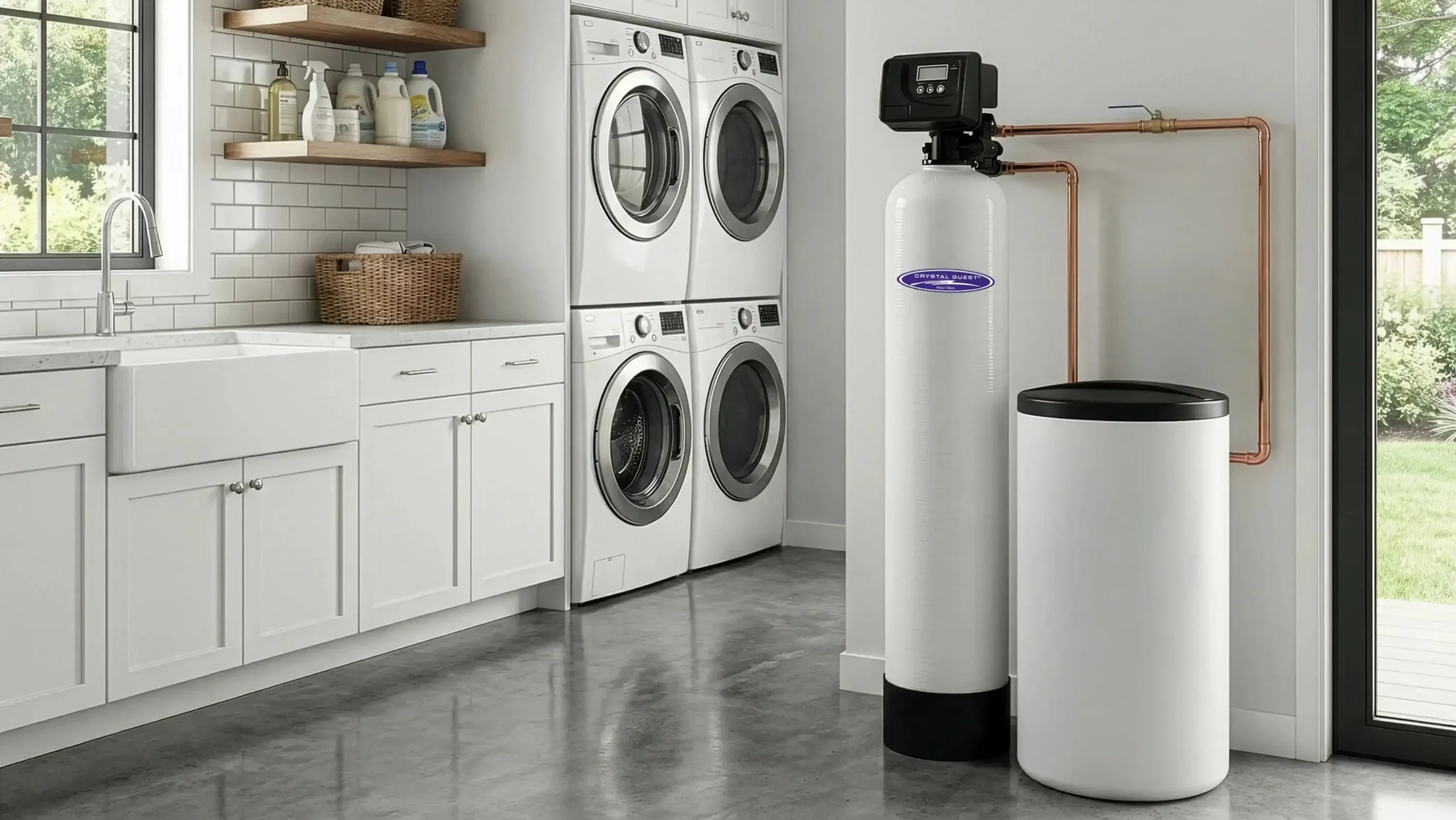
Water softeners commonly use an ion-exchange process. In a typical system, water passes through resin beads that attract hardness ions. The system periodically regenerates the resin so it can continue working.
The result is water with significantly reduced hardness.
That can help minimize mineral deposits and may make cleaning easier. Some households also notice changes in how soap behaves and how laundry feels after washing.
But a softener isn’t a universal water purifier.
If your water contains iron, sediment, sulfur odors, or other concerns, additional treatment may be needed. That’s why choosing a system based solely on a sales pitch or a neighbor’s recommendation isn’t ideal.
Your water may not have the same characteristics as theirs.
Testing Should Come Before Shopping
It’s easy to walk into a store, see a water-treatment system advertised as a complete solution, and think, “That’s probably what I need.”
Maybe. Maybe not.
Professional water testing & analysis can provide a much clearer picture of the water entering your home. Depending on the source and purpose of the test, analysis may examine hardness, pH, iron, manganese, dissolved solids, sediment, bacteria, or other characteristics.
This is especially useful for private wells.
Well water can vary naturally, and changes in groundwater conditions or well equipment can sometimes affect water quality. Testing provides a baseline and helps identify whether hardness is actually the primary issue.
It also prevents you from treating a problem that isn’t there.
Hard Water Can Affect Appliances
Your washing machine and dishwasher don’t complain when mineral deposits build up.
They just keep working until performance begins to change.
Water heaters are especially worth considering because heating water can encourage mineral deposits to accumulate. Over time, scale may affect components and reduce efficiency.
Other equipment, including coffee makers, kettles, humidifiers, and certain plumbing fixtures, can also experience mineral buildup.
Reducing hardness may help limit these deposits, although no treatment system eliminates the need for normal appliance maintenance.
Think of water treatment as one piece of the maintenance puzzle, not a replacement for taking care of equipment.
Cleaning Products May Behave Differently
Hard water can make household cleaning more frustrating.
Calcium and magnesium can interact with soap and contribute to residue. This can leave a film on sinks, tubs, shower surfaces, and sometimes laundry.
People often respond by adding more detergent.
That’s understandable, but more detergent doesn’t necessarily equal cleaner clothes or dishes. Depending on the water and cleaning products involved, softer water may allow households to use less product while achieving satisfactory results.
The exact improvement varies, though. Washing machines, detergents, temperatures, and personal cleaning habits all matter.
Still, if you feel like you’re constantly adding soap and getting mediocre results, water hardness is worth investigating.
Don’t Forget About Water Pressure
Mineral deposits can sometimes affect small openings in plumbing fixtures.
Faucet aerators and showerheads have relatively narrow passages, so deposits can restrict flow over time.
A sudden reduction in pressure isn’t always caused by hard water, of course. Clogged filters, plumbing problems, pressure-regulator issues, and other causes should also be considered.
If the problem appears at only one fixture, inspect that fixture first.
If water pressure changes throughout the house, a broader plumbing or treatment-system evaluation may be appropriate.
The important thing is to diagnose rather than assume.
Choosing the Right Softener
If testing confirms significant hardness, the next step is selecting an appropriately sized system.
Household size matters. So does daily water use and the hardness level itself.
A system that’s too small may regenerate frequently and struggle with demand. A system that’s far larger than necessary can cost more without delivering a meaningful advantage.
Consider the location too.
The installation area needs enough room for the equipment and future servicing. Depending on the design, drainage and electrical requirements may also need to be considered.
A good installation should make maintenance reasonably easy rather than turning every service visit into an obstacle course.
Salt, Water, and Maintenance Costs Add Up
If you’re considering a traditional salt-based softener, look beyond the purchase price.
Regeneration uses water, and salt or another regenerant needs to be replenished. Components may need servicing, and settings can require adjustment over time.
Ask about expected operating costs before making a decision.
A system that costs slightly more upfront may be more efficient or easier to maintain. Conversely, expensive features aren’t useful if they don’t solve a problem your household actually has.
Think in terms of total ownership cost.
When Hard Water Isn’t the Only Issue
Sometimes homeowners assume every water problem is caused by hardness.
That’s not the case.
Iron can cause orange or reddish staining. Sediment can make water cloudy or clog filters. Sulfur compounds can create unpleasant odors. Certain contaminants require specialized treatment.
This is another reason testing is so valuable.
A water softener may handle hardness very well while doing little for an unrelated problem. If multiple issues are present, a combination of treatment technologies may make more sense.
The treatment plan should follow the test results.
Maintenance Keeps Treatment Working
Installing a softener isn’t the finish line.
Salt levels need monitoring where applicable. The system should be inspected periodically, and components should be serviced according to the manufacturer’s recommendations.
It’s also smart to pay attention to changes in water quality.
If stains return, soap behaves differently, or water begins to taste or smell unusual, don’t assume the equipment has failed. The incoming water may have changed, or another component may need attention.
Keep a simple record of maintenance and testing. It can save time when troubleshooting later.
A Simple Decision Can Prevent a Lot of Trouble
Hard water isn’t usually an emergency. It’s more of a slow-moving household nuisance that can become expensive when ignored for years.
If you’re seeing recurring mineral deposits, stained fixtures, soap residue, or appliance scale, start by finding out what’s actually in your water.
Test first. Understand the hardness level. Check for other water-quality issues. Then choose equipment based on household demand, installation conditions, operating costs, and maintenance needs.
The goal isn’t to own the fanciest treatment system.
It’s to have water that behaves better in your home.
When the right system is properly installed and maintained, the improvements can be pleasantly ordinary: fewer deposits, easier cleaning, better-performing fixtures, and less time spent scrubbing away a problem that keeps coming back.
Sometimes that’s all you really wanted in the first place.