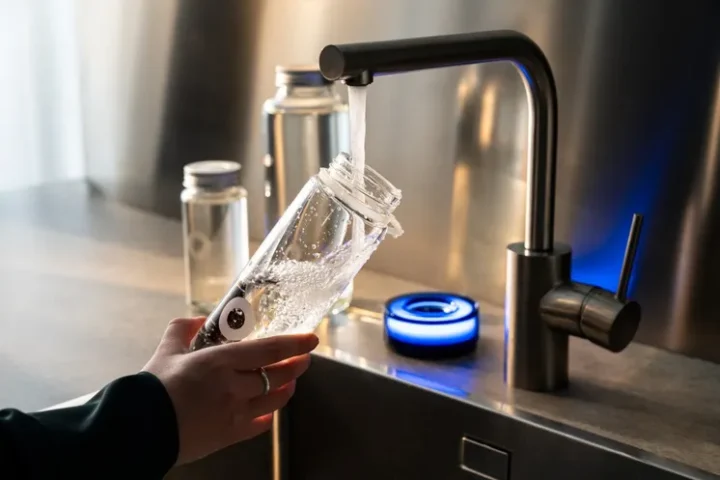
There’s a moment most people have experienced: you pour a glass of water, take a sip, and immediately think, “That tastes…off.”
Maybe it has a faint chlorine note. Perhaps it tastes metallic, flat, or slightly earthy. Or it looks perfectly normal but doesn’t feel as refreshing as it should. These little details can change how often people reach for tap water, which is unfortunate because staying hydrated shouldn’t require a second thought.
Improving drinking water at home doesn’t necessarily mean installing an enormous treatment system. Sometimes the solution is surprisingly simple. The trick is figuring out what is affecting your water and choosing treatment designed around that specific issue.
Taste Matters More Than We Admit
Water doesn’t need to taste like anything, really. But when it has an unusual flavor, people notice.
A strong disinfectant taste can make tap water unpleasant. Minerals may create a metallic or slightly salty character. Organic compounds can sometimes affect odor and flavor too.
For many households, improving taste is enough to change everyday habits. Better-tasting water makes it easier to fill a reusable bottle before leaving home, pour another glass with dinner, or use tap water when cooking.
The goal is great taste for drinking & cooking, not simply water that passes through a filter and comes out slightly different.
That starts with understanding the source of the unwanted taste.
Why Water Can Taste Different
Municipal water is treated to control microorganisms, and disinfectants such as chlorine may remain in the supply as water travels through the distribution system. That’s an important public-health function, but some people dislike the resulting taste or smell.
Household plumbing can also influence water quality. Water that sits in pipes for extended periods may taste different when the faucet is first opened, especially in older plumbing systems.
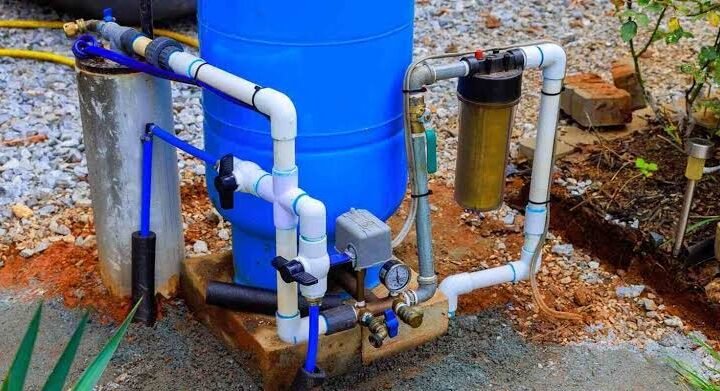
Private wells bring another set of possibilities. Groundwater can naturally contain minerals, iron, sulfur compounds, or other substances that affect taste.
In other words, there isn’t one universal explanation for “bad-tasting water.”
Testing can help identify what you’re actually dealing with.
Clarity Isn’t Just About Appearance
People naturally judge water with their eyes. Clear water feels clean. Cloudy water makes us hesitate.
In some cases, cloudy water is simply caused by tiny air bubbles. Fill a glass and let it sit for a few minutes. If the water clears on its own, trapped air may be the explanation.
But persistent cloudiness can have other causes, including sediment, mineral precipitation, or disturbances in the plumbing or water source.
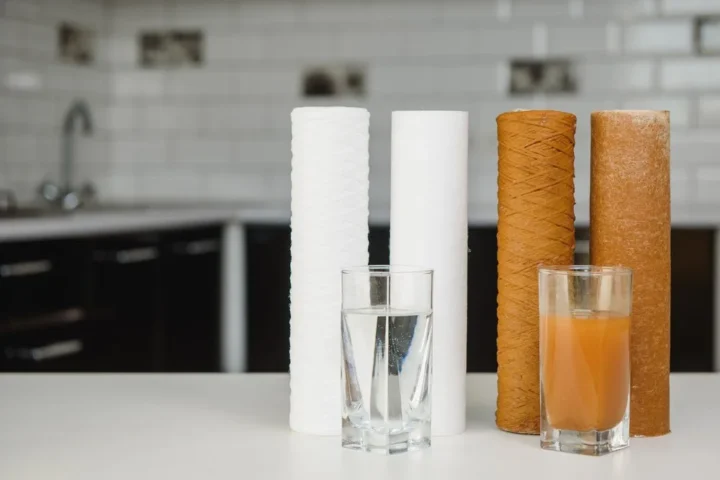
A good drinking-water system should be selected based on the cause rather than appearance alone. If particles are present, sediment filtration may help. If dissolved substances are the concern, another technology may be appropriate.
That’s how you achieve consistent clarity without treating a symptom while ignoring the source.
Point-of-Use Filtration Can Be Practical
Not every home needs water treatment at every fixture.
If your primary concern is drinking and cooking water, a point-of-use system can be a practical choice. It treats water at or near the faucet where you actually consume it.
Depending on water conditions, options may include carbon filtration, reverse osmosis, or other specialized technologies.
One advantage is efficiency. You’re not necessarily treating every gallon used for toilets, showers, and laundry when your main goal is better drinking water.
That can make a smaller system easier to install, maintain, and understand.
Reverse Osmosis Has a Specific Role
Reverse osmosis is often discussed when homeowners want more extensive treatment for drinking water.
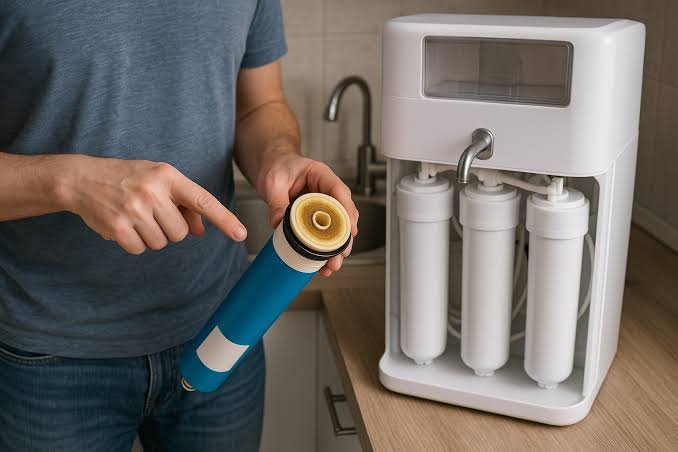
The technology uses a semipermeable membrane to reduce many dissolved substances. Systems commonly combine the membrane with prefilters and postfilters, depending on the design.
It’s an effective tool for certain water-quality goals, but it isn’t automatically the right answer for every household.
Reverse osmosis systems need maintenance. Filters and membranes require periodic replacement, and the system needs appropriate water pressure and installation.
If the water problem is simply chlorine taste, a carbon filter may be sufficient. If testing identifies dissolved substances that call for more intensive treatment, reverse osmosis may make more sense.
Match the technology to the job.
Your Kitchen Setup Matters
A water filter shouldn’t make your kitchen harder to use.
Before installation, consider available cabinet space, faucet configuration, plumbing connections, and access for filter replacement. A technically excellent system can become frustrating if the filter housing is buried behind cleaning supplies and impossible to reach.
This is why choosing equipment that fits your kitchen is more important than it might initially seem.
Think about the people who will actually use and maintain it. Can someone replace the filter without calling a plumber? Is the drinking-water faucet positioned somewhere convenient? Does the system interfere with storage?
Small practical details often determine whether a system remains useful for years or becomes something everyone avoids.
Don’t Ignore Water Pressure
Filtration can affect flow, especially when filters become loaded with sediment or when a system isn’t properly sized.
If you already have marginal water pressure, treatment equipment should be selected with that condition in mind.
A filter that performs well at the beginning of its service life may behave differently as it collects particles. Regular maintenance becomes important here.
Pay attention to changes. If the flow from a dedicated drinking-water faucet suddenly slows, check the filter before assuming there’s a larger plumbing problem.
Sometimes the fix is simply overdue maintenance.
Testing Gives You a Better Starting Point
A water test can help answer questions that your senses can’t.
Hardness, iron, pH, sediment, disinfectants, and other characteristics can influence taste and appearance. More specialized testing may be appropriate when there are concerns about particular contaminants.
Testing is especially useful for private wells because groundwater quality can vary significantly from property to property.
It also prevents a common mistake: buying treatment equipment based on someone else’s water.
Your neighbor may love their system. That doesn’t necessarily mean you need the same one.
Maintenance Is Part of Better Water
Even a high-quality drinking-water system needs attention.
Carbon filters have limited capacity. Reverse osmosis membranes eventually need replacement. Sediment filters can clog. Other components have their own service requirements.
Put replacement dates on your calendar. Keep track of what was changed and when.
If water taste or clarity suddenly changes, investigate rather than ignoring it. The cause could be an exhausted filter, a plumbing issue, or a change in the incoming water.
A few minutes of maintenance can keep a small concern from turning into a bigger one.
Better Water Doesn’t Need to Be Complicated
There’s a temptation to believe that the best drinking water requires the most advanced equipment. That’s not necessarily true.
A well-designed system should solve a specific problem without creating unnecessary complexity.
Start by understanding the water. Decide whether your priority is taste, clarity, dissolved substances, hardness, or something else. Consider where treatment is actually needed. Then choose equipment that matches the household and the available space.
Most importantly, don’t treat water based solely on marketing promises.
The best result is wonderfully ordinary. You turn on the faucet and the water tastes fresh. You fill a glass without hesitation. Cooking feels normal. The filter fits neatly where it belongs, and maintenance doesn’t become a weekend project.
That’s what good drinking-water treatment should deliver—not a complicated gadget to think about every day, but water you genuinely enjoy using.