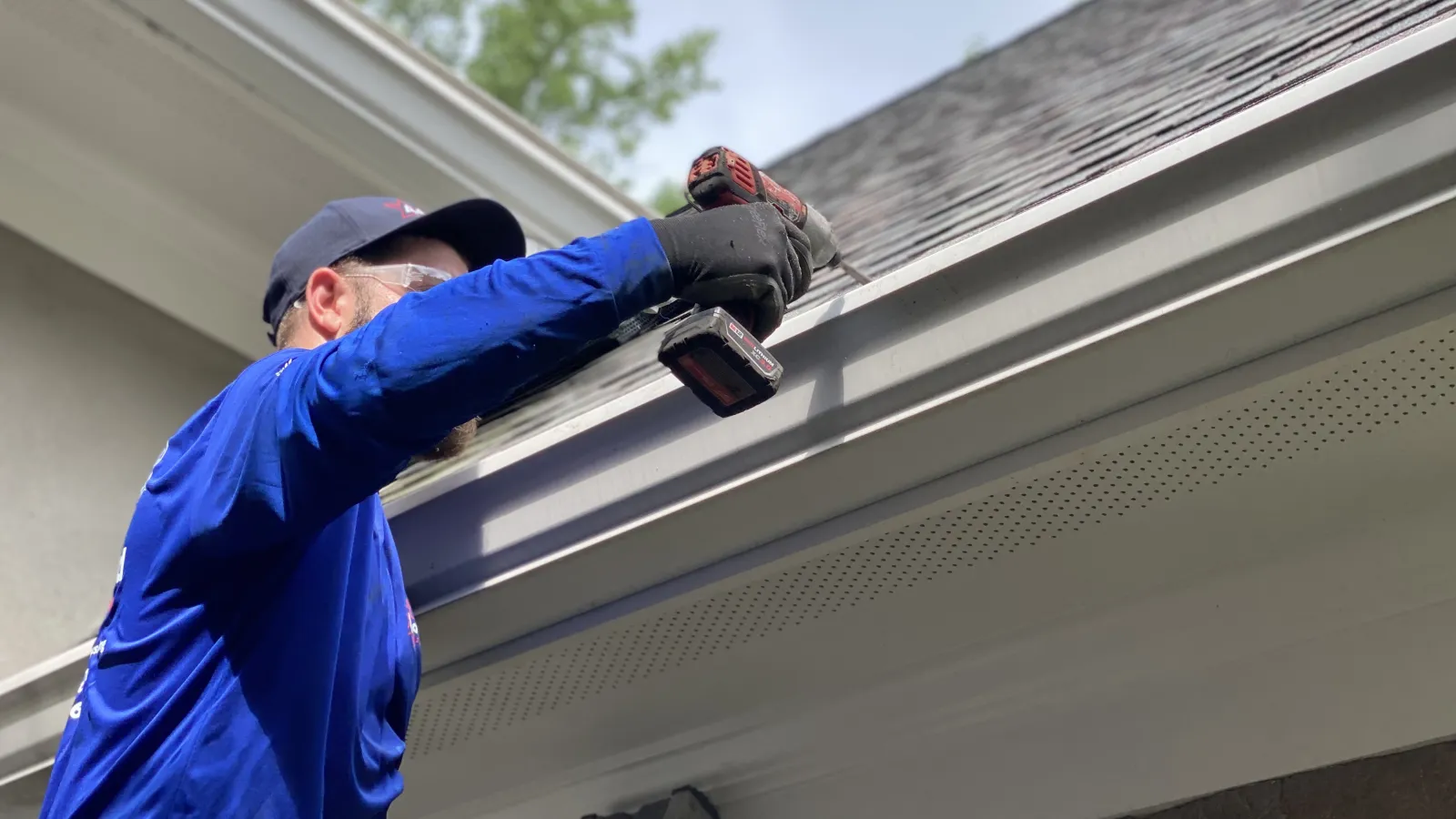
Gutters aren’t exactly the most exciting part of a house. Nobody pulls into a driveway and thinks, “Those are some beautiful gutters.”
Yet they quietly perform one of the most important jobs around the property. Every time rain falls, the gutter system collects water from the roof and directs it away from walls, windows, landscaping, and the foundation. When that simple process works, you barely notice it.
When it doesn’t, you notice very quickly.
Water spills over the sides. Soil washes away. Basement or crawl-space moisture appears. Exterior paint starts peeling. In colder weather, poorly draining gutters can even contribute to ice-related problems.
That’s why gutter care deserves more attention than it usually gets. A little maintenance, timely repair, and sensible replacement can protect much more than the gutter itself.
Start by Understanding What Your Gutters Actually Do
Rainwater naturally wants to move downhill.
Without a controlled drainage system, water running from the roof can land directly beside the foundation. Over time, repeated runoff can erode soil and create areas where water collects.
Gutters interrupt that process.
They capture roof runoff and carry it toward downspouts, which should discharge water far enough away from the house to reduce the risk of pooling near the foundation.
It sounds simple, and mostly it is. But the system needs to be correctly sized, properly pitched, securely attached, and kept clear of debris.
One weak point can affect the whole setup.
Don’t Wait Until Water Is Pouring Over the Edge
One of the easiest signs of a gutter problem is also one of the most obvious: overflowing water during rain.
But you don’t necessarily need to wait for a storm to identify trouble.
Look for sagging sections, separated joints, visible cracks, rust, loose fasteners, and downspouts that appear disconnected. Check whether water is leaving the downspout properly and whether the ground below shows signs of repeated erosion.
A quick inspection a couple of times a year can reveal issues while they’re still manageable.
When Professional Gutter Installation Makes Sense
If you’re building a new home or replacing an outdated drainage system, gutter installation should be approached as part of the exterior’s overall water-management plan.
The goal isn’t simply to attach gutters to the roofline.
The installer needs to consider roof size, pitch, drainage points, downspout locations, local rainfall, and the shape of the building. Long runs may require appropriate slope and additional support.
Downspouts also matter enormously. A gutter can collect water perfectly, but if that water is discharged right against the foundation, the system isn’t doing its job very well.
Good installation is about directing water where you want it to go.
Cleaning Is Boring, But It Works
Leaves, twigs, pine needles, dirt, and other debris can accumulate inside gutters.
Once enough material builds up, water can’t flow freely.
Cleaning frequency depends on the property. Homes surrounded by mature trees may need more frequent attention than houses in open areas.
While cleaning, inspect the system rather than simply scooping out debris.
Are the gutters pulling away from the fascia? Are there cracks? Are seams opening? Is the downspout blocked?
Cleaning is a good opportunity to catch small problems before they become larger ones.
Small Problems Often Deserve Small Repairs
Not every gutter issue requires a complete replacement.
A loose section may simply need to be secured. A minor joint leak could potentially be resealed. A clogged downspout may only need clearing.
That’s where gutter repair can be a practical solution.
The important part is understanding the cause.
If a gutter keeps separating from the same location, there may be a structural or installation issue behind it. Re-sealing the joint repeatedly won’t necessarily solve the problem.
A good repair should address why the failure happened, not just make the visible symptom disappear.
Know When Replacement Is the Better Choice
There is a point where repairs become a cycle.
If gutters are heavily rusted, badly damaged, repeatedly leaking, or pulling away from the house in multiple locations, continued patching may not make financial sense.
In that situation, gutter replacement can provide a cleaner and more dependable long-term solution.
Replacement also gives you an opportunity to reconsider the layout.
Maybe the existing downspouts aren’t positioned well. Perhaps the gutters are undersized for the roof area. Maybe the system has simply reached the end of its useful life.
Starting over can sometimes solve several problems at once.
Material Choices Aren’t Just About Appearance
Gutters are available in materials such as aluminum, steel, copper, and vinyl.
Aluminum is widely used because it offers a practical combination of weight, durability, and corrosion resistance. Steel can provide strength but may require more attention to corrosion depending on the finish and environment.
Copper has a distinctive appearance and can develop a natural patina over time, but it comes at a higher cost.
Vinyl can be suitable for certain applications and budgets, although climate and installation conditions should be considered.
Don’t choose solely by color.
Think about durability, maintenance, local weather, and how long you expect to stay in the home.
Downspouts Deserve More Attention
Homeowners often focus on the horizontal gutters and forget about the vertical sections.
That’s a mistake.
Downspouts are responsible for moving collected water away from the roofline. If they’re clogged or poorly positioned, the whole system becomes less effective.
Watch where the water exits.
If you see puddling around the foundation after rainfall, the downspout may need to be extended or redirected. In some properties, a more comprehensive drainage solution may be appropriate.
Again, the goal is simple: move water away from vulnerable areas.
Gutter Guards Can Help, But They’re Not Magic
Gutter guards can reduce the amount of debris entering a gutter system, particularly on properties with many trees.
But they don’t make maintenance disappear.
Different guard designs perform differently, and small debris can still accumulate. Some systems may also require periodic cleaning or inspection.
If you’re considering guards, look at the entire gutter system first.
Installing a guard over damaged or poorly pitched gutters won’t fix the underlying problem.
Watch the Fascia Behind the Gutters
Gutters attach to parts of the home’s roof-edge structure, commonly including fascia boards.
If gutters have been leaking or pulling away for a long time, the material behind them may also have been affected.
Look for soft wood, staining, peeling paint, or signs of rot.
If damage is discovered during replacement, it should be addressed before the new gutter system is installed.
Otherwise, you’re simply attaching new equipment to a compromised surface.
Don’t Ignore Storm Damage
Strong winds, falling branches, hail, and heavy rain can damage gutters surprisingly easily.
After a significant storm, take a quick look from the ground.
Check for bent sections, detached downspouts, visible cracks, and areas that no longer appear properly aligned.
If something looks unsafe or difficult to reach, don’t climb onto the roof just to investigate it yourself.
A professional inspection is usually the safer choice.
Good Gutters Protect More Than Gutters
The value of a drainage system isn’t really in the metal or vinyl itself.
It’s in what the system protects.
Properly directed water can help reduce soil erosion, protect exterior surfaces, and minimize unnecessary moisture around the foundation.
That makes gutters part of the home’s broader defense against water damage.
They work alongside the roof, siding, flashing, grading, and other drainage components.
If one part fails, another may end up carrying more of the burden.
A Little Attention Goes a Long Way
Gutters don’t need constant attention, but they shouldn’t be forgotten either.
Clean them when necessary. Inspect them after major storms. Watch for sagging, leaks, separation, and poor drainage. Fix small issues before they become recurring problems.
And when the system is genuinely worn out, don’t be afraid to replace it rather than spending year after year on temporary fixes.
A good gutter system is almost invisible when it’s working properly.
That’s the funny thing about effective home maintenance. The best result is often the problem you never have to deal with because you handled it early.
So the next time rain starts falling, take a moment to notice where the water goes.
If your gutters are doing their job, you’ll probably forget about them again in five minutes.
And that’s exactly how it should be.