There’s a certain kind of home that looks beautiful the moment you walk through the door, but it doesn’t necessarily tell you anything about the people who live there. Everything is polished. Everything matches. Nothing feels out of place. And yet, you can’t quite imagine anyone kicking off their shoes and settling in for a lazy Sunday afternoon.
Then there are homes that feel different.
Maybe the furniture isn’t perfectly symmetrical. There’s a photograph leaning against a bookshelf, a favorite chair with a little wear on the arm, or a collection of objects picked up during years of travel. The rooms still feel considered, but they also feel lived in. That balance is often what makes an interior memorable.
Designing a home is, after all, less about creating a perfect picture and more about creating a place where real life can happen comfortably.
Starting With the People, Not the Trends
Trends come and go quickly. One year, a particular color is everywhere. A few years later, another look takes over. Following every trend can leave a home feeling strangely disconnected from its owners.
A better starting point is the people who will actually use the space.
How do they spend their evenings? Do they entertain often or prefer quiet dinners? Is the kitchen a working space or the social center of the house? Does someone need a peaceful room for reading? Are there children, pets, collections, hobbies, or routines that deserve consideration?
These questions might sound simple, but they can completely change the direction of a project.
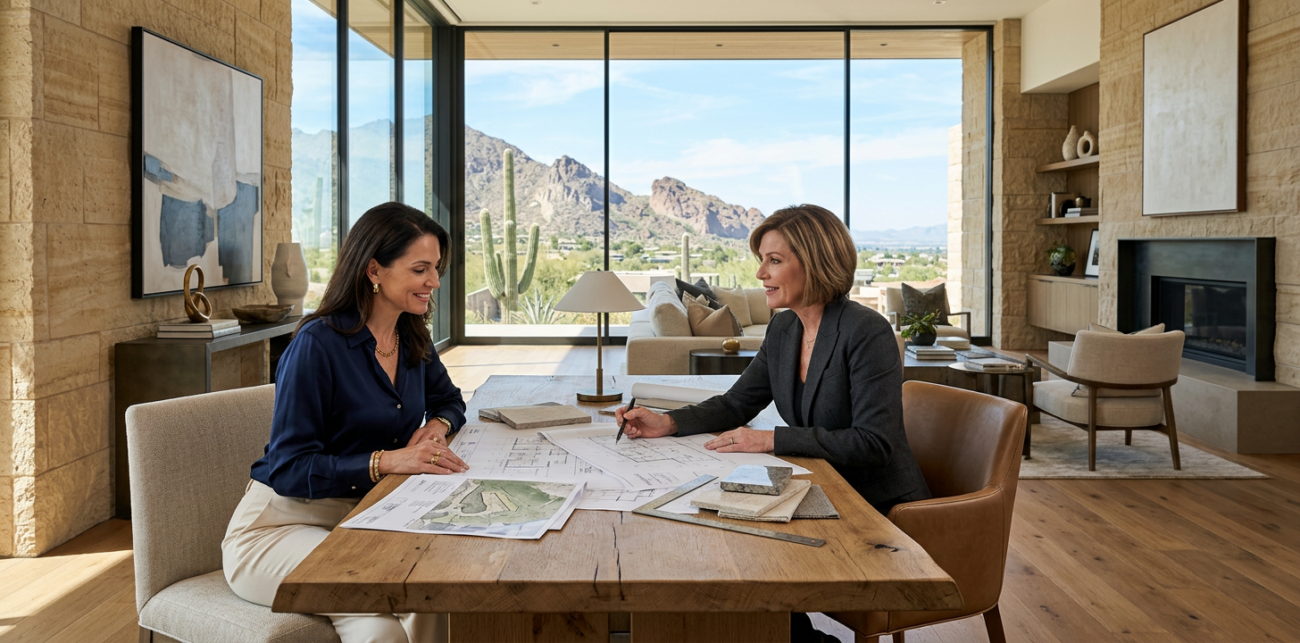
A thoughtful full-service custom residential design studio can bring all of these pieces together, from early concepts and architectural coordination to furnishings, materials, lighting, and final installation. The advantage of a full-service approach is continuity. Instead of treating each decision as an isolated task, the design can develop as one connected story.
That continuity becomes especially useful when a project has many moving parts. There are plenty of decisions to make, and it’s easy for the original vision to get lost somewhere between the floor plan and the final accessories.
Beauty Needs a Reason
A beautiful object is nice. A beautiful object that makes sense in a room is better.
The right sofa might encourage conversation. A carefully positioned lamp can create a reading corner. A dining table can become the place where homework, holiday meals, and late-night conversations all happen. Even artwork can influence how people move through a space and where their attention naturally lands.
This is why design shouldn’t be reduced to choosing attractive things.
The question isn’t simply, “Do I like this?”
It’s also, “Why does this belong here?”
Sometimes the answer is emotional. A piece reminds someone of a family member. Sometimes it’s practical. A particular fabric can handle everyday use better than another. Sometimes it’s simply because the proportions are right.
Good design allows all three kinds of reasoning to coexist.
Creating Rooms With Emotional Depth
A room can be technically successful and still feel flat.
Texture is one of the easiest ways to add depth. Layered fabrics, natural wood, stone, metal, woven materials, and soft upholstery can create contrast without making a space visually noisy. Lighting does something similar. A room illuminated only by overhead fixtures often feels very different from one that has table lamps, wall lighting, accent lights, and natural daylight working together.
Color matters, of course, but it doesn’t always have to be bold.
A warm neutral palette can be incredibly expressive when different tones and textures are allowed to play against each other. A darker accent wall can make artwork stand out. A subtle pattern on a chair can keep a quiet room from becoming too predictable.
The trick is restraint. Not everything needs to demand attention.
Making the Interior Deeply Personal
The most convincing homes usually contain things that couldn’t belong to just anyone.
A collection of books. A handmade bowl. An inherited painting. A photograph from a trip that still makes someone smile. Even something as ordinary as a well-loved blanket can carry more emotional weight than an expensive decorative object.
These details make a home deeply personal because they connect the space to an actual life.
They also prevent a room from feeling like it came straight out of a catalog. There’s nothing wrong with inspiration from magazines or design websites — they can be incredibly useful. But the final interior should eventually move beyond inspiration and become something that reflects its occupants.
That may mean mixing old and new. It may mean leaving room for imperfect pieces. It may even mean keeping something that a designer wouldn’t have selected initially because it matters to the homeowner.
There’s value in that kind of honesty.
Luxury Without the Need to Announce It
Luxury is often associated with obvious things: expensive materials, oversized rooms, elaborate fixtures, and rare furnishings. But some of the most sophisticated interiors don’t rely heavily on any of those signals.
Instead, luxury can come from comfort and precision.
A sofa that feels wonderful to sit on. Curtains that fall beautifully and operate smoothly. Cabinetry that opens exactly when and where it should. Lighting that changes naturally throughout the day. A bedroom that feels calm rather than crowded.
This is the appeal of something quietly luxurious. The quality is there, but it doesn’t need to shout.
Often, you notice it through experience rather than appearance. The room feels comfortable. The materials feel good in your hands. Everything seems to have a place.
That sort of luxury tends to age better, too.
The Importance of Cohesion
A home doesn’t need to have the same style in every room. In fact, that can become boring.
What it does need is some sense of connection.
Perhaps the same wood tone appears in different spaces. Maybe a recurring color links the living room with the bedroom. Similar metal finishes can quietly connect lighting and hardware. Architectural details might repeat a particular shape or proportion.
These relationships don’t have to be obvious.
In many cases, the best cohesion is almost invisible. You simply walk through the house and feel that one room belongs with the next.
Allowing a Home to Evolve
No home is truly finished.
People change. Their tastes change. Families grow. Furniture gets moved around. Artwork gets replaced. A guest room becomes an office, and later becomes something else entirely.
A good interior should have enough flexibility to accommodate those changes.
That doesn’t mean designing everything to be temporary. It means avoiding choices that are so rigid they leave no room for life. Durable materials, adaptable furniture, useful storage, and thoughtful lighting can help a home remain comfortable even as circumstances shift.
And sometimes, a little imperfection is exactly what makes the space feel right.
A home should have room for real life — including the occasional pile of mail, a forgotten coffee cup, and a chair that somehow always ends up in the wrong place.
A Home That Feels Like It Belongs
The ultimate measure of an interior isn’t how impressive it looks when nobody is using it.
It’s how it feels when everyone is home.
The kitchen should invite people in. The living room should make conversation easy. Bedrooms should encourage rest. Hallways should connect spaces naturally rather than simply filling leftover square footage.
When those things happen, design becomes more than decoration.
It becomes part of the rhythm of daily life.
And perhaps that’s why the most memorable homes aren’t always the most dramatic ones. They’re the homes where every choice feels connected to the people who live there — where comfort, personality, craftsmanship, and beauty sit together without competing for attention.
A well-designed home doesn’t have to prove anything.
It simply has to feel like it was made for you.