Somewhere around 90% of startups don’t make it long-term, and a huge chunk of that failure happens in year one. I’ve sat with founders after their startup shut down, and the reasons they give are almost never “the idea was bad.” Understanding why startups fail matters more than chasing the next brilliant idea.
Let’s go through the real reasons — not the sanitized version you see on LinkedIn.
The Honest Answer to Why Startups Fail
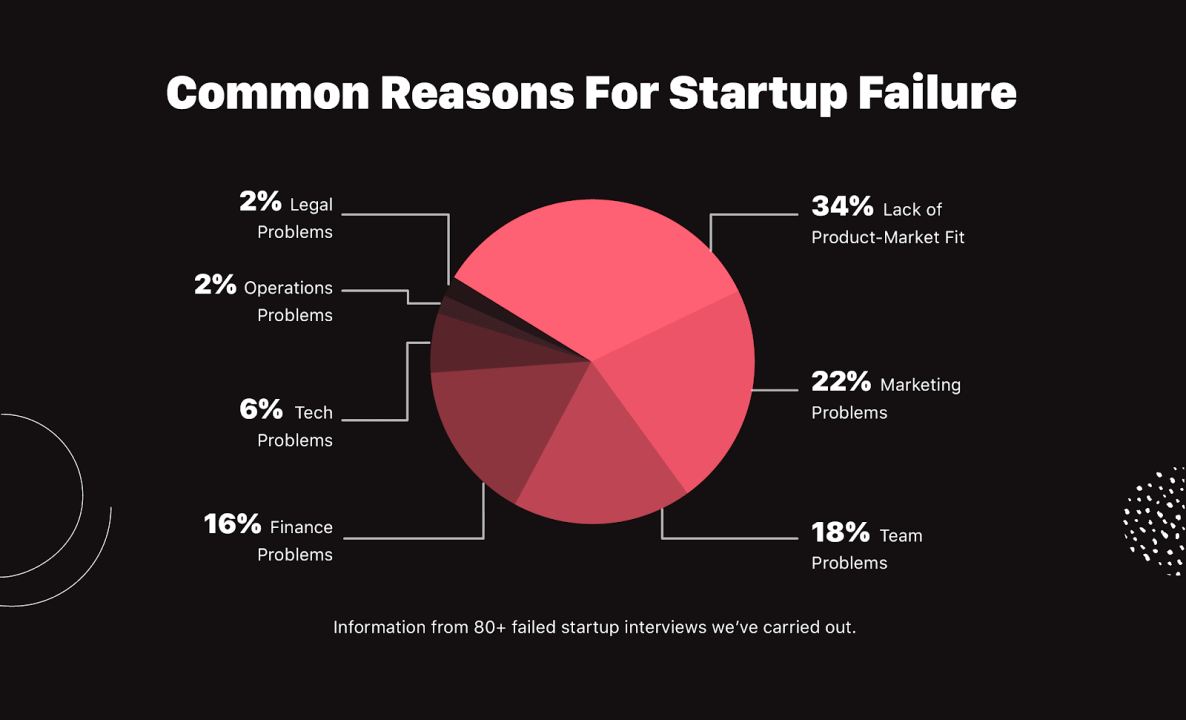
Most startups fail in their first year due to running out of cash before finding product-market fit — not because the idea itself was weak. Poor cash management, hiring too fast, and ignoring customer feedback usually sit right behind that core issue.
1. They Build Something Nobody Actually Wants
This is the classic one. Founders fall in love with their solution before confirming there’s a real problem behind it. I’ve noticed this happens most with technically brilliant founders — the tech is impressive, but nobody’s life actually gets easier using it.
2. Running Out of Cash Too Fast
Startups burn money faster than expected almost every single time. Office space, salaries, tools — it adds up quicker than founders plan for, especially in the first six months.
A rough rule some investors use: have at least 12-18 months of runway before you even start.
3. Wrong Co-Founder Fit
This one doesn’t get talked about enough. Founder conflicts — over equity, vision, or workload — quietly kill more startups than bad products do. If your co-founder relationship feels off in month two, it rarely fixes itself by month twelve.
4. Scaling Before Validating
Some founders hire a 15-person team before confirming even 50 people actually want to pay for the product. That’s expensive, and reversing it is painful.
Scaling before you’ve validated demand is one of the fastest ways startups fail, because your burn rate grows while your revenue signal is still unproven.
5. Ignoring Customer Feedback
Founders sometimes treat early criticism as noise instead of data. A few common patterns of ignored feedback:
- Users asking for a feature repeatedly, but it gets deprioritized
- Customers churning and nobody follows up to ask why
- Support tickets piling up without pattern analysis
6. Poor Marketing (or None at All)
“Build it and they will come” doesn’t really work anymore, if it ever did. Plenty of genuinely good products die quietly simply because nobody heard about them.
[link to related guide about digital marketing strategy here]
7. Legal and Compliance Mistakes
This sounds boring, but skipped paperwork — GST registration, contracts, IP protection — has ended more startups than people realize, especially once a dispute or audit shows up.
8. Founder Burnout
Nobody talks about this enough either. Working 80-hour weeks for a year straight isn’t sustainable, and burned-out founders make worse decisions exactly when good decisions matter most.
[link to related guide about entrepreneurial mindset here]
What Actually Helps Startups Survive
There’s no magic formula, but a few patterns show up repeatedly among survivors:
- Talk to customers before building, not after
- Keep the team lean until revenue justifies growth
- Track burn rate weekly, not quarterly
- Choose co-founders you’ve actually worked with before
FAQ
What percentage of startups fail in the first year? Estimates vary, but many studies put first-year failure somewhere between 10-20%, with the number climbing significantly by year five.
Is running out of money always the “real” reason startups fail? It’s often the final trigger, but usually there’s a deeper cause behind it — like weak product-market fit — that led to the cash running out.
Can a good product still fail? Yes. Bad timing, poor distribution, or wrong pricing can sink even genuinely useful products.
Should first-time founders bootstrap or raise funding? Depends on the business. Bootstrapping forces discipline; funding buys speed. Neither is universally “better.”
How do I know if I should shut down or keep pushing? Honestly, look at your runway and your traction trend line together. If both are declining with no clear fix in sight, it might be time for a hard conversation with your co-founders.
Conclusion
Most startup failure stories aren’t dramatic — they’re slow, quiet, and preventable in hindsight. If you’re building something right now, treat these patterns as a checklist, not a scare tactic. Talk to your customers this week. Check your runway today. The founders who survive aren’t necessarily smarter — they just paid attention to the boring stuff early.
[Suggested image alt text: “exhausted startup founder working late at a laptop”] [Suggested image alt text: “empty office space of a shut down startup”]